


Access Methods
For Difficult
Repair Areas
Concrete cancer can affect areas that are difficult to reach, including high-rise façades, balcony edges, bridge soffits and marine structures.
We plan the access and repair works together, choosing a method that suits your structure, site conditions and repair scope. This helps us reach damaged areas safely while minimising disruption to residents, businesses and daily operations.
Different Repair Areas
Need Different Access Systems
There is no single access system that suits every concrete repair. A balcony slab edge on a high-rise building, a beam above a car park ramp, a bridge soffit and a confined basement plant area can all require completely different access planning.
Our access-method pages explain the main systems used for difficult concrete cancer and remedial repair locations, including the variations that sit within each category.

How We Reach
Difficult Repair Areas
Explore 15 access methods, from low-level platforms to specialist marine, under-bridge and below-ground systems. Choose a category for equipment options, applications and planning considerations.
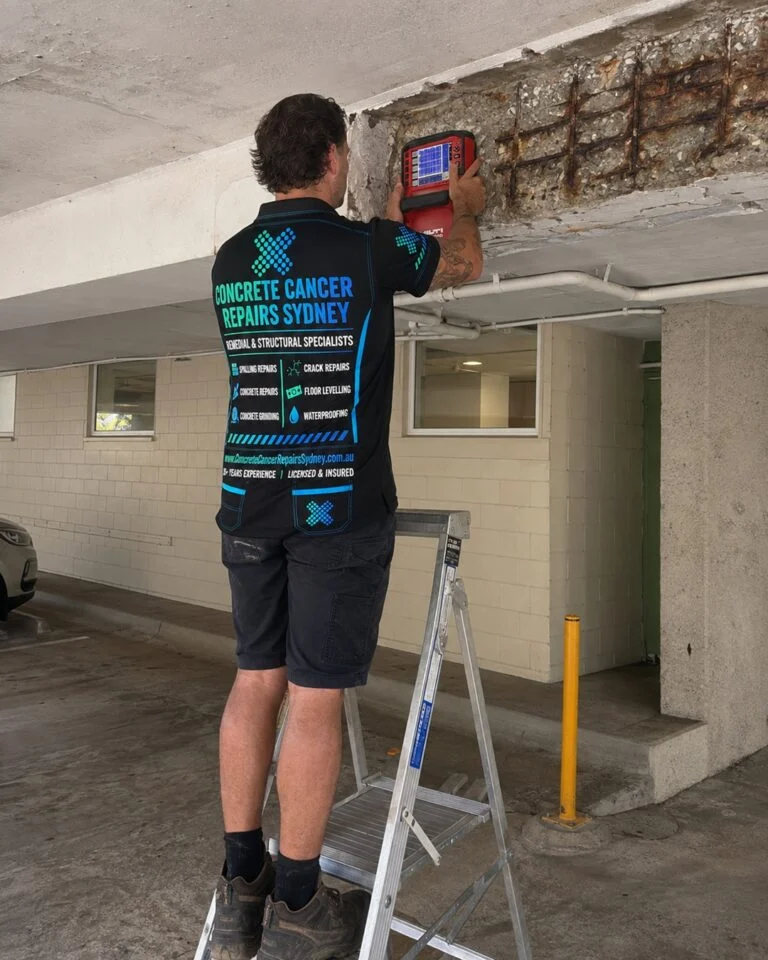
Ladders & Low-Level Access
For smaller, lower-height repair areas where short-duration access can be achieved without larger plant or scaffold systems.
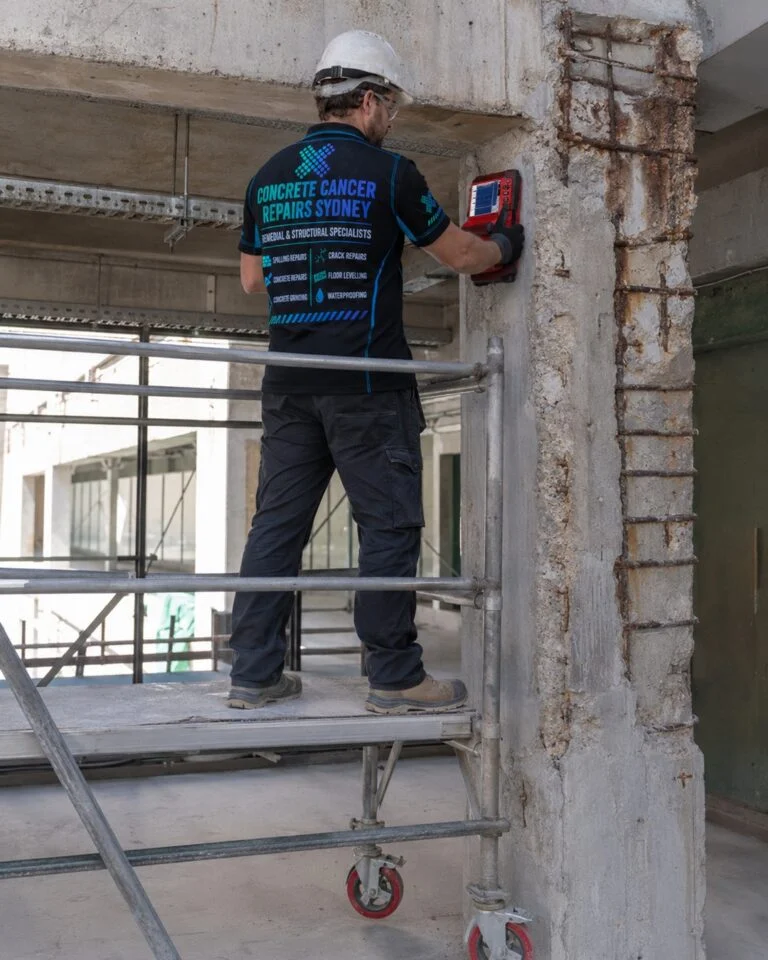
Mobile Scaffolding
Rolling scaffold towers and compact mobile platforms for repair zones that need a stable work deck with the ability to relocate between areas.
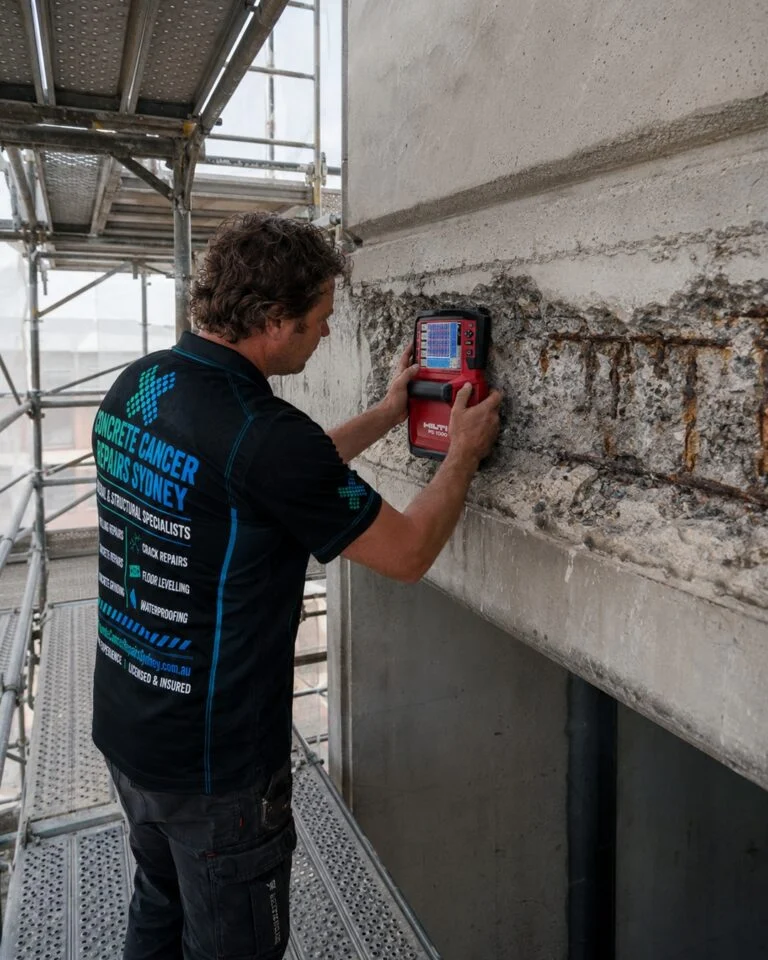
Fixed Scaffolding
Stable scaffold systems for larger, longer-duration or multi-level concrete repairs where continuous access to the workface is required.
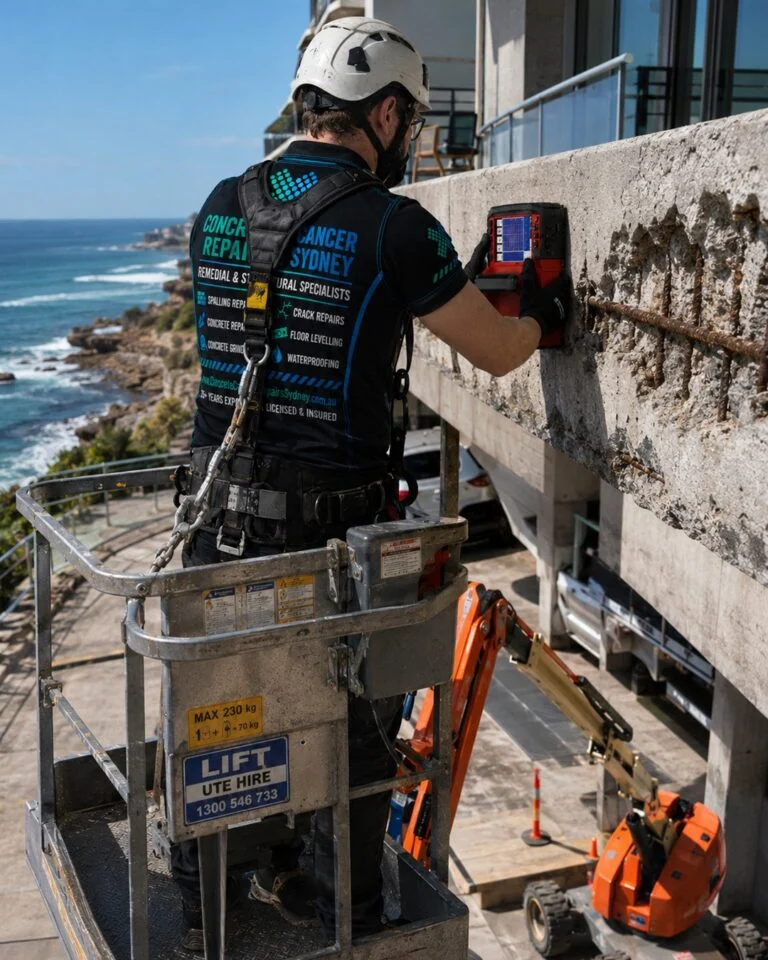
Elevated Work Platforms
Boom lifts, knuckle booms, scissor lifts and compact elevated platforms for repair locations that can be reached from suitable ground or floor access.
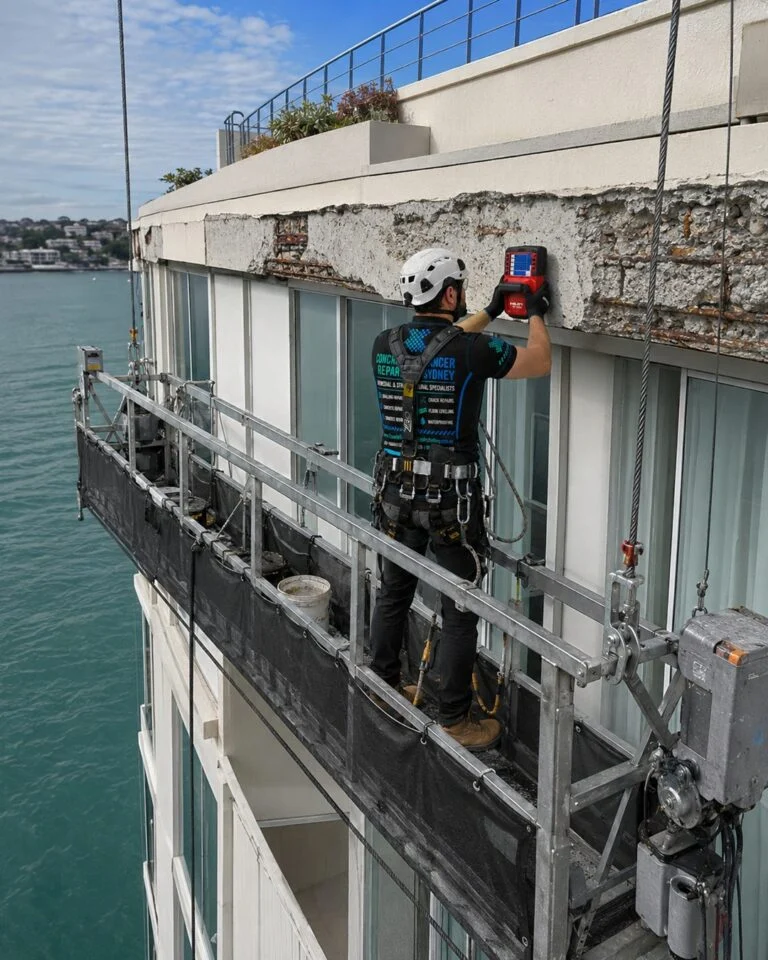
Swing Stages
Suspended façade platforms that travel vertically along a building face for multi-level concrete repairs where ground-based access is limited.
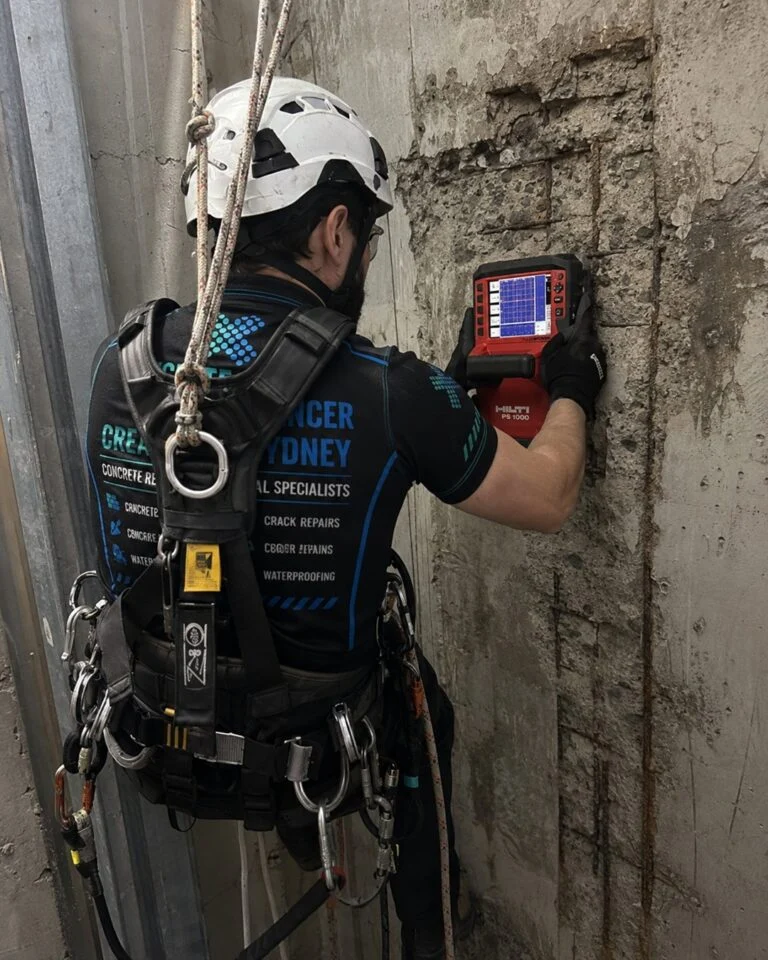
Rope Access
Industrial rope-access systems for façades, slab edges, soffits and other locations where platforms or ground-based machines are impractical.

Suspended Scaffolding & Work Platforms
Hung scaffold, suspended decks and temporary work platforms for undersides, bridges, wharves and locations with no practical ground-supported access.

Confined & Restricted Access
Access planning for pits, shafts, narrow voids, low-clearance basements and other repair areas where standard equipment cannot physically reach the workface.
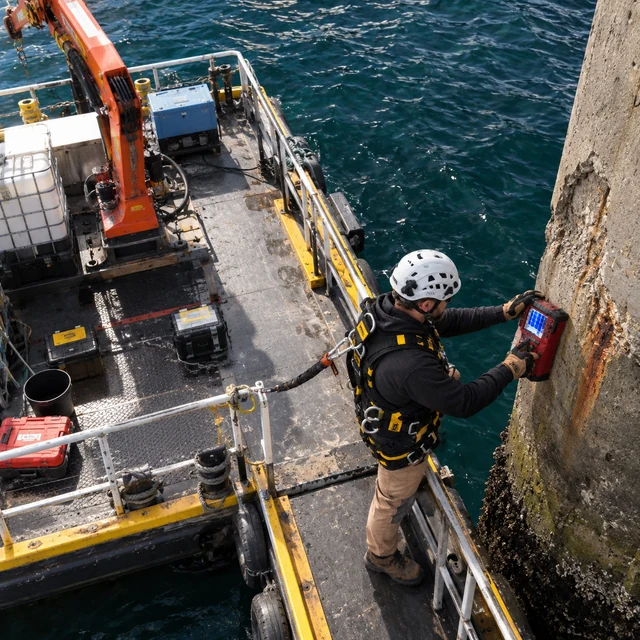
Barges & Floating Work Platforms
Water-based working decks for piles, wharves and waterfront repair areas where suitable land-based access is unavailable.
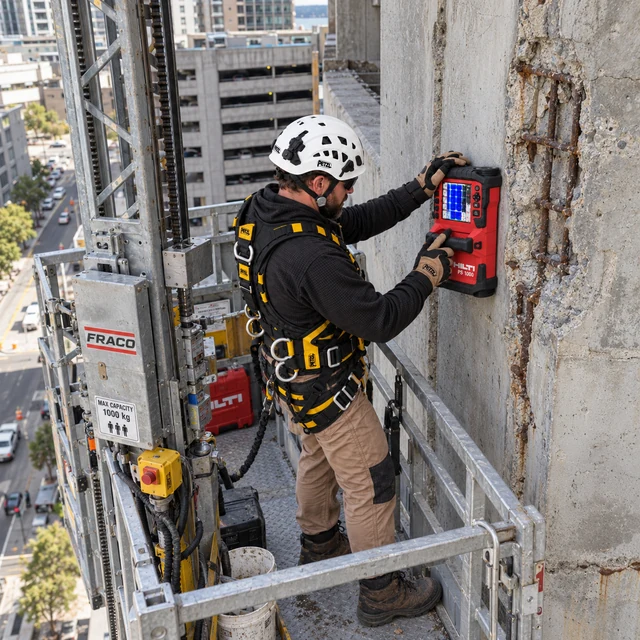
Mast Climbing Work Platforms
Mast-supported working decks that travel vertically for repeated facade, slab-edge and larger staged concrete repair works.
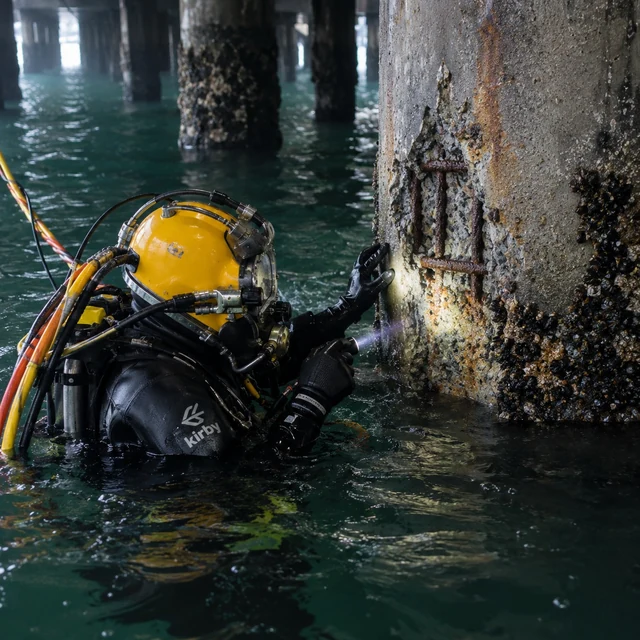
Commercial Diving & Underwater Access
Specialist diving access to submerged piles, bridge piers, seawalls and concrete repair areas that cannot be reached in the dry.

Dewatered Work Areas
Controlled drainage and water isolation that expose concrete repair areas in tanks, tunnels, culverts, pits and water-retaining structures.
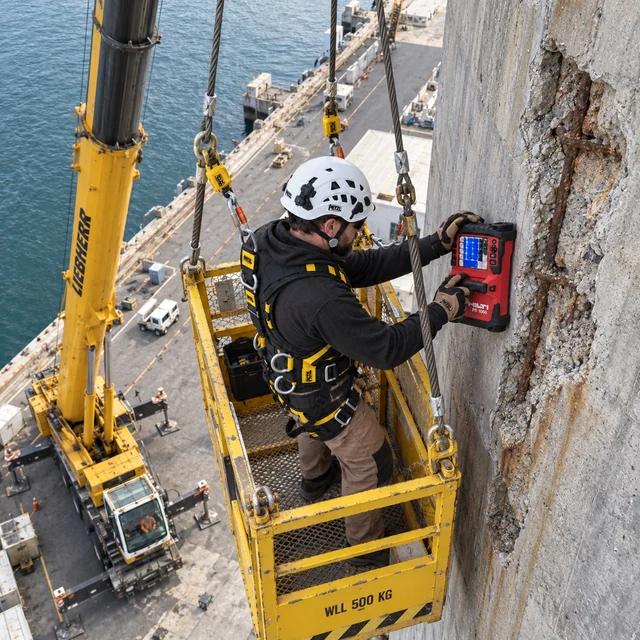
Crane-Suspended Workboxes
Specialist personnel workboxes for isolated repair areas where conventional scaffold or EWP access is difficult or impractical.
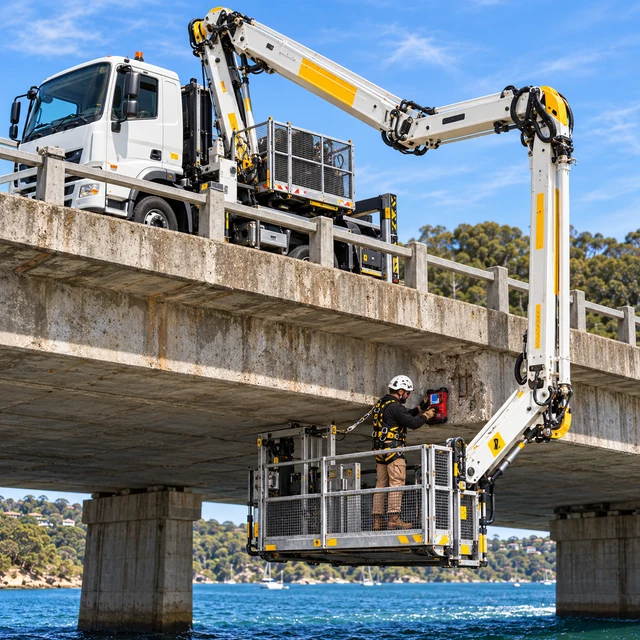
Under-Bridge Access Units
Specialist mobile units that extend over a bridge edge and beneath the deck, providing access for concrete inspection and repair where reaching the structure from below is difficult.
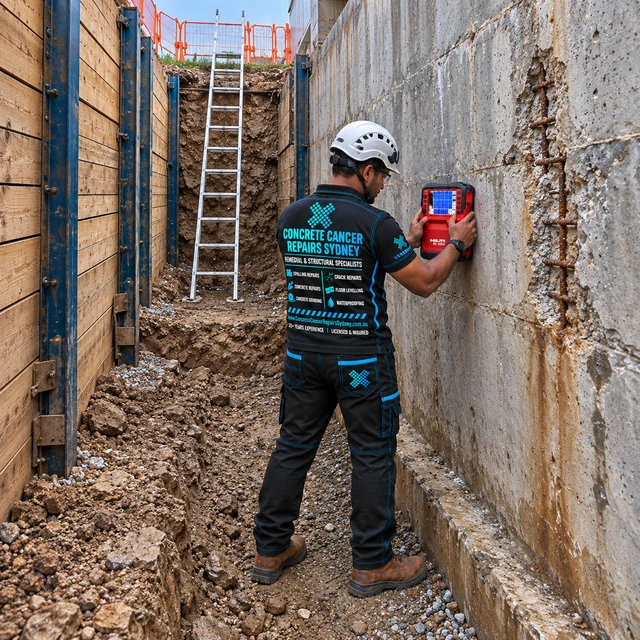
Excavation & Below-Ground Access
Controlled excavation exposes buried concrete walls, footings and foundations for inspection and repair, with access planned around ground conditions, nearby structures and underground services.
Unsure Which
Access Method
You Need?
Show us the repair area. We’ll help assess suitable access options.
- Show us the damage
- Tell us the location
- Arrange an inspection
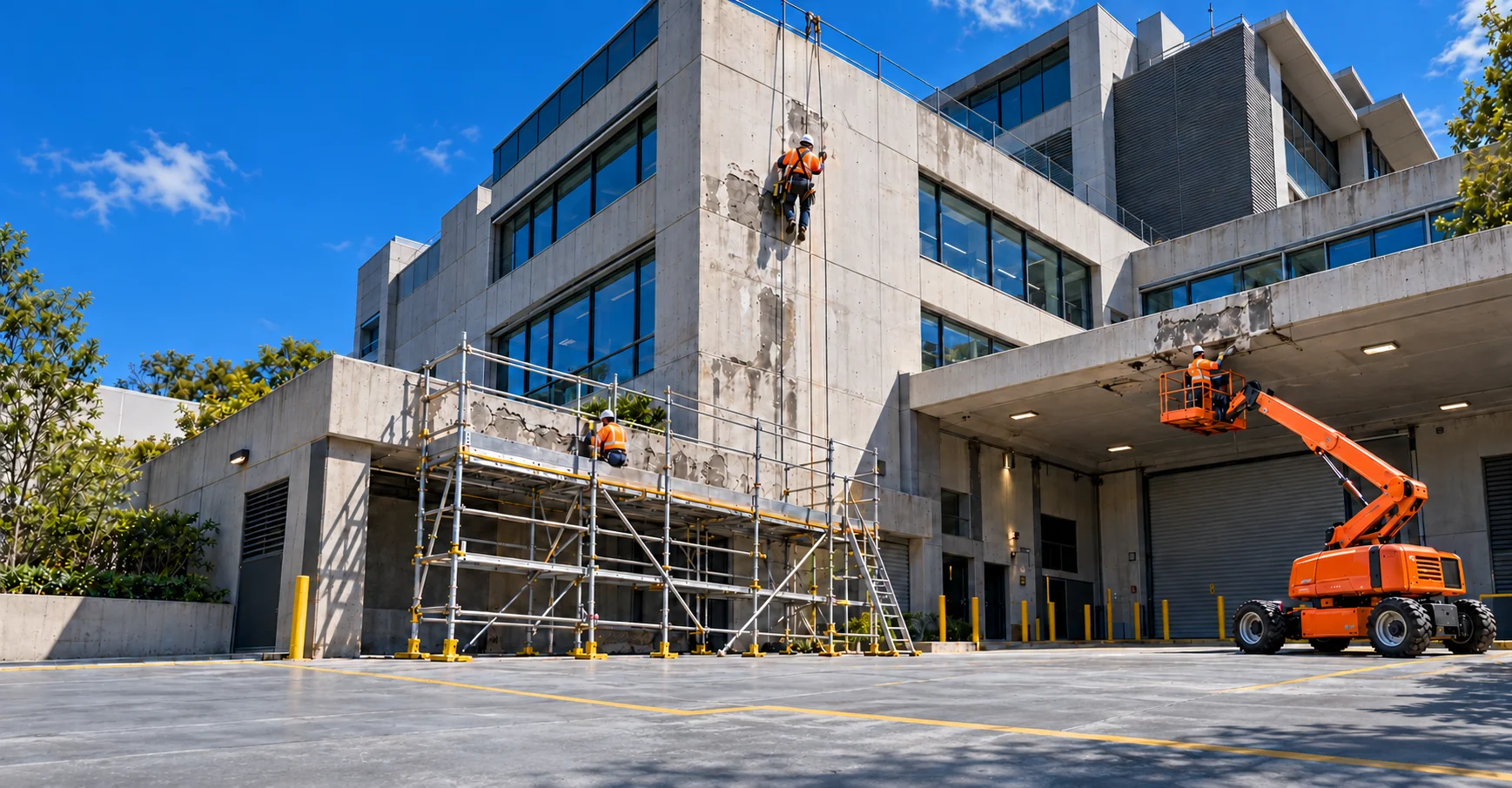
One Building.
More Than One
Access Method.
Different repair zones can need
different working positions.
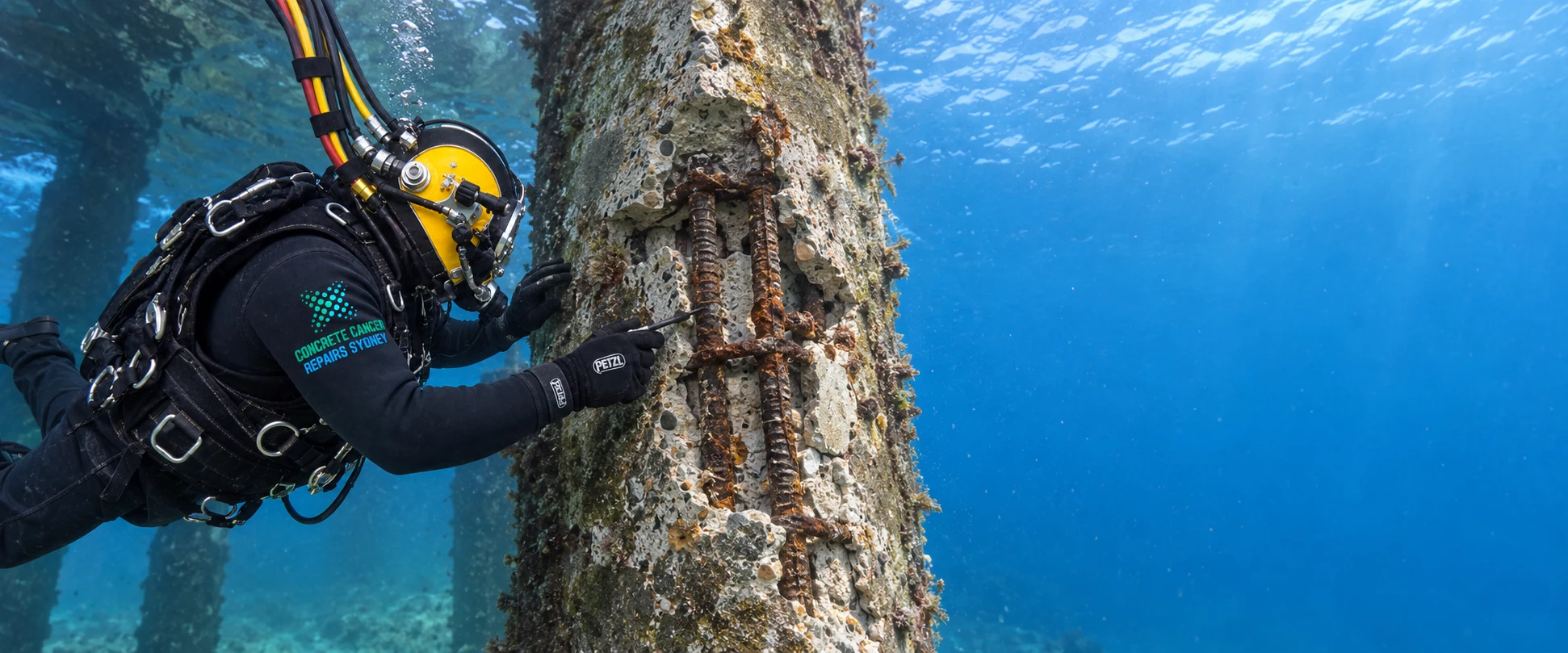
Difficult Access?
Let’s Discuss It.
We have experience with challenging sites including marine environments, high-rise structures and live working areas.
-
Height And Façade Access
Solutions for elevated and vertical areas.
-
Marine And Waterfront Sites
Repairs below the waterline and in tidal zones.
-
Live And Occupied Properties
Work carefully around ongoing site operations.

Access
Questions.
Answered.
Practical answers for owners,
strata managers and site teams.
Do I Need To Know Which Access Method Is Required?
No. Tell us where the damage is and share any photos or reports. We can assess suitable access options for the repair area and confirm what needs checking on site.
Can You Assess Access From Photos Or An Engineer’s Report?
Photos and an engineer’s report are a useful starting point. Wide shots showing the building, repair area and surrounding ground help us assess likely options. A site inspection may still be needed to check dimensions, access routes, ground conditions and other constraints.
What If Machinery Cannot Reach The Repair Area?
We can assess alternatives such as rope access, scaffolding, suspended platforms or specialist under-bridge and marine systems. The suitable method depends on the structure, available support points and what the repair work involves.
Can Different Access Methods Be Used On The Same Building?
Yes. Different repair zones can need different working positions. Rope access may suit an upper façade, an elevated work platform may reach a canopy, and scaffolding may suit longer repair runs. These can be planned together as part of one repair scope.
Will You Need Access Through Apartments Or Internal Areas?
Sometimes. Roof access, balconies, internal rooms or service areas may be needed to reach or set up for the work. We confirm the required routes and coordinate access with the owner, strata manager or site team before starting.
Can Entrances, Parking And Occupied Areas Remain In Use?
Where practical, works can be staged around occupants and daily operations. Some areas may need temporary closures, exclusion zones or alternative routes while equipment is set up and repairs are underway. These arrangements are assessed for the specific site.
Who Arranges The Access Equipment?
We coordinate access requirements as part of the repair planning. Depending on the method, this can involve equipment providers, scaffolders, rope-access teams or other specialist contractors. Responsibilities, setup and timing are confirmed before work starts.
Does Inspection Access Also Suit The Repair Work?
Not always. An inspection may only need a short visit to the defect. Repairs can require more working space, tools, materials, waste handling and repeated access during curing. We assess the access needed for the complete repair process.