



Dewatered
Work Areas
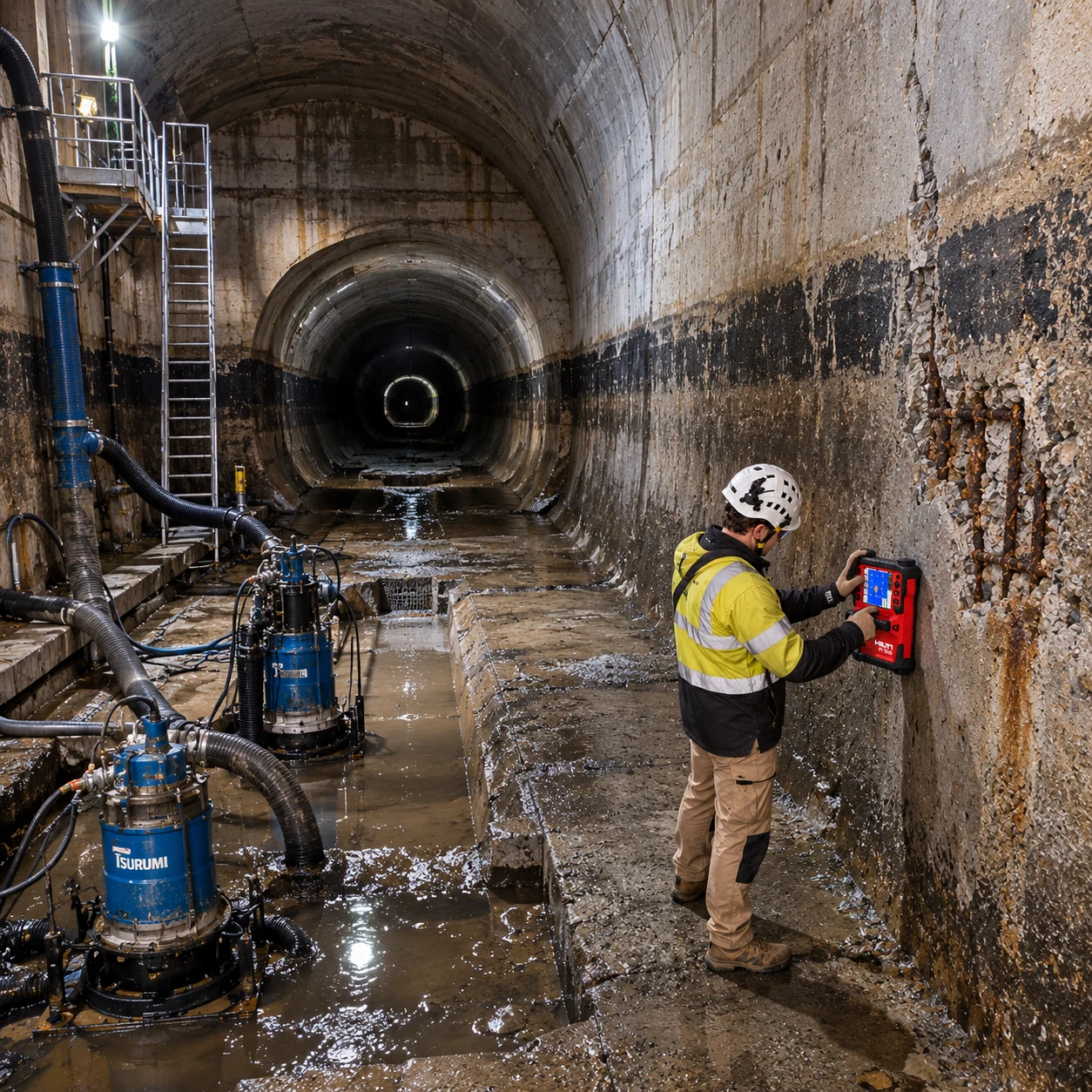
Where water prevents access to damaged concrete, an isolated and dewatered work area can expose the repair face. Drainage, pumping, structural conditions and entry arrangements are planned together for the repair scope.
Expose The Concrete
For Repair Access
Dewatered work areas are created by controlling incoming water and removing standing water from a defined repair zone. Depending on the asset, this may involve operational isolation, temporary flow management and pumping to expose the concrete.
Removing water does not by itself make an area suitable for entry or repair. Structural stability, ventilation, access and the condition of the exposed surface still need to be assessed. The selected repair materials must suit the actual moisture and curing conditions.
Dewatered Access
Arrangements
The arrangement depends on how water enters the structure, whether the asset can be isolated and the conditions needed for the repair.
Drained Tanks & Reservoirs
Operationally isolated water-retaining structures drained to expose walls, floors, joints and other repair areas.
Dewatered Tunnels & Channels
Controlled drainage and flow management to provide access along damaged concrete walls, inverts and structural elements.
Isolated Culvert Sections
Defined repair zones with temporary water management assessed against upstream and downstream flow conditions.
Pumped Pits & Chambers
Water removal from pits, sumps and chambers, with incoming water, structural loading and entry requirements assessed separately.
Isolated Waterfront Work Zones
Defined marine or waterway areas where an assessed isolation arrangement allows the repair face to be exposed.
Staged Dewatered Areas
Sections of a larger asset isolated and drained in sequence to suit the repair programme and operating constraints.
Typical Concrete Repair
Applications
Dewatered access can support direct examination, controlled preparation and specified repair work where standing or flowing water otherwise blocks the workface.
What We Consider Before
Using This Method
Isolation & Incoming Water
Consider how water enters the work zone, how isolation will be maintained and how changes in weather or asset operation affect the area.
Dewatering & Stability
Removing water changes loading conditions. Water pressure, uplift, seepage and ground movement need assessment before drainage.
Entry & Changing Conditions
Plan access, ventilation, any confined-space requirements, monitoring and the response to rising water or equipment failure.
Repair & Water Management
Allow for surface moisture, curing, collected slurry, water treatment or disposal and the sequence for returning the asset to service.
Important: Access systems are selected and set up for the actual site conditions. Required licences, competencies, engineering, exclusion zones, fall protection, rescue planning and other controls are determined by the work being undertaken and the applicable site/WHS requirements.
Advantages
Exposes otherwise submerged repair surfaces
Supports direct preparation and inspection
May allow specified repair systems requiring exposed concrete
Can provide sustained access within an isolated work zone
Limitations
Some structures cannot be practically isolated or drained
Water management and pumping can add substantial setup
Incoming water and weather can interrupt the work
Structural stability and entry requirements still apply after drainage
How We Plan A
Difficult-Access Repair
Inspect The Repair Area
Confirm the defect location, extent, structure type and the access obstacles surrounding it.
Compare Practical Access Options
Consider reach, platform size, setup, duration, site disruption and the repair equipment required.
Plan The Work Method
Coordinate access setup, exclusion zones, material handling, protection and repair sequencing.
Complete Works In Stages
Carry out the repair with access repositioned or staged as required across the structure.
Questions About This
Access Method
?What is a dewatered work area?⌄
It is a defined zone where incoming and standing water are managed so the concrete can be accessed for inspection, preparation or repair.
?Can we simply pump out water around damaged concrete?⌄
No. Water removal must be assessed with the structure, surrounding water pressure, ground conditions, discharge arrangements and the ability to keep the work zone isolated.
?Does draining a tank or tunnel make it ready for entry?⌄
No. Access, atmosphere, ventilation, structural condition, possible water ingress and any confined-space requirements must still be assessed and managed.
?Is exposed concrete automatically dry enough to repair?⌄
No. Dewatering removes standing water, but concrete can remain wet. Surface preparation, moisture and curing conditions must meet the requirements of the specified repair system.
Need Concrete
Cancer Repairs?
Tell us about the damage and upload any photos or reports you have. We'll review the information and help determine the appropriate next step.
Prefer To Speak With Us?Call Or Text 0424 408 330