




CONCRETE
CRACK REPAIRS
SYDNEY
SPECIALIST CONCRETE CRACK REPAIRSASSESSMENT & TARGETED REPAIRS
Specialist concrete crack assessment, monitoring and repairs for buildings, slabs, beams, columns, balconies and infrastructure across Sydney.Concrete crack assessment, injection and stitching repairs across Sydney.
CRACK REPAIR
SPECIALISTSCRACK SPECIALISTS
Repair methods selected for the crack and its cause.
BUILDINGS, SLABS
& STRUCTURESALL PROPERTY TYPES
Repairs across residential, strata and commercial sites.
EXPERIENCED TEAMSPECIALIST ACCESS
Experience with complex access and remedial repair works.
FREE SITE INSPECTIONCLEAR REPAIR SCOPES
Accurate assessment and expert advice on your project.

CRACK ASSESSMENT
& TARGETED REPAIRS
SPECIALIST CONCRETE CRACK REPAIRS
We assess the crack type, movement and moisture before selecting epoxy injection, polyurethane injection, crack stitching or another suitable repair approach.
CRACK REPAIR
SPECIALISTSDiagnosis and site-specific repair planning.
INJECTION &
CRACK STITCHINGRepair systems selected for the defect and structure.
FREE SITE
INSPECTIONAccurate assessment and expert advice on your project.
WHAT ARE CONCRETE CRACKS?
UNDERSTAND THE CAUSE
BEFORE THE REPAIR
Concrete cracks can develop through shrinkage, movement, loading, settlement, corrosion or construction-related factors. The correct approach depends on the crack pattern, width and depth, whether it is still moving, and whether water is passing through it.Cracks can have different causes. We assess their pattern, movement and moisture before recommending repair.
EXPERIENCEASSESSConcrete crack repairs
KNOWLEDGEREPAIRCrack diagnosis
FOCUSEDPROTECTLocal team, local conditions

REQUEST A FREE SITE INSPECTION
Speak with our concrete crack repair specialists. Tell us about the cracking and we’ll help you understand the next steps.
Discuss your crack repairs
Send your photos and project details through our existing inspection form, or call our team.
WHAT CAUSES
CONCRETE CRACKING?
Movement, loading, moisture and material changes can all contribute to concrete cracking. Understanding the cause helps determine the repair approach.
shrinkage
movement
effects
corrosion
WHERE CONCRETE CRACKS OCCUR

Balconies & façades

Basements & car parks

Beams & soffits

Walls & columns

Slabs & podiums

Marine & infrastructure
COMMON SIGNS REQUIRING INVESTIGATION

Fine concrete
cracks

Wide & open
cracks

Cracks getting
bigger

Water leaking
through cracks

Cracks returning
after repairs

Uneven crack
edges
CONCRETE CRACK REPAIR METHODS
We select the repair method to suit the crack’s cause, movement, depth and moisture conditions.
Epoxy injection
Bonds suitable stable cracks where structural continuity is required.
View methodCrack stitching
Adds reinforcement across cracks where the repair design requires stabilisation.
View methodPolyurethane injection
Seals leaking cracks using a resin selected for the site conditions.
View methodWe also carry out Routing And Sealing and Flexible Crack Sealing, where suitable.
COMMON TYPES OF CONCRETE CRACKS
Crack appearance is only part of the assessment. Width, depth, location, movement and moisture guide the next step.
Shrinkage cracks
Cracking associated with concrete drying and changes in volume.
Structural cracks
Cracks that require assessment of loading and structural behaviour.
Settlement cracks
Cracking associated with differential ground or building movement.
Thermal cracks
Cracks associated with temperature-related expansion and contraction.
Flexural cracks
Cracking associated with bending and tension in a concrete member.
Surface crazing
Fine networks of shallow cracks that need assessment in context.
Corrosion-related cracks
Cracking caused by expansion of corroding reinforcement.
Water-bearing cracks
Cracks carrying moisture or active leakage through concrete.
CRACK MONITORING & MOVEMENT ASSESSMENT
Some cracks need monitoring before the most suitable repair method and timing can be selected.

1. Install gauge
Fit a suitable crack gauge or tell-tale at the assessed location.
2. Record baseline
Document the initial reading, position and site conditions.
3. Review movement
Take further readings to track change over an agreed period.
4. Confirm approach
Use the results to guide repair selection and timing.
Before & During Crack Repairs


See the change from visible concrete cracking to a sealed crack line with injection ports in place. Use the slider to compare the crack before treatment and during injection repair.
Visible Cracking
Assess the crack path, movement and moisture conditions.
Crack Injection
Injection ports and surface sealant are in place along the crack.
Repair Review
Assess the repair and complete the specified finishing work.
EPOXY INJECTION
FOR STRUCTURAL CRACKS
For suitable stable cracks, epoxy injection can bond the crack faces and restore continuity in accordance with the repair design.
Assess suitability
Check crack stability, moisture, substrate condition and repair objectives.
Prepare and install ports
Prepare the crack and set injection ports at the specified spacing.
Inject resin
Apply a suitable epoxy under controlled pressure and follow the specified sequence.
Finish and review
Complete curing, remove or finish ports and review the repair.


POLYURETHANE
INJECTION FOR
LEAKING CRACKS
Water-bearing cracks may need a sealing system selected for the crack path, moisture conditions and ongoing movement.
ASSESS THE WATER PATH
Investigate the source of leakage, crack extent and access before choosing the injection system.
PREPARE & INJECT
Prepare the crack and install injection ports. Apply a suitable polyurethane resin under controlled pressure.
SEAL & REVIEW
Remove or finish ports as specified, reinstate the surface and review water ingress after treatment.
Method and materials are selected to suit engineering requirements and site conditions.
Discuss your leaking cracksCRACK STITCHING
FOR STRUCTURAL
STABILITY
For suitable concrete cracks, reinforcement is installed across the crack to provide additional support in accordance with the repair design.
Assess & plan
Assess the crack and confirm the specified reinforcement layout.
Prepare slots & anchorage
Prepare and clean the required slots and anchorage locations.
Install & bond reinforcement
Install reinforcement across the crack using the specified bonding system.
Finish & review
Reinstate the surface and review the completed repair.

OUR CRACK REPAIR PROCESS
- 01
Inspection
Assess crack patterns and site conditions.
- 02
Crack mapping
Record widths, locations and moisture.
- 03
Diagnosis
Assess movement and likely causes.
- 04
Preparation
Select the system and prepare the crack.
- 05
Repair works
Inject, stitch or seal as specified.
- 06
Final review
Check the repair and discuss next steps.
STAGED REPAIRS WITH MINIMAL DISRUPTION
Crack repairs are planned around access, work zones and day-to-day activity so residents, tenants and businesses can keep moving.

Work windows
Plan suitable repair windows around building use, access and material curing.
Access planning
Assess the structure and site constraints to identify practical access arrangements for the proposed repairs.
Operational coordination
Coordinate repair zones and staging with site representatives around residents, tenants and daily activity.
Work-zone protection
Plan containment, barriers and material handling for the affected repair area.
SPECIALIST ACCESS METHODS
The right access for your structure, location and repair scope.
Rope Access
Targeted access to façades, soffits and hard-to-reach cracks.
Elevating Work Platforms
Boom and scissor lift access where ground conditions and reach allow.
Confined Space Entry
Planned entry into confined spaces where the repair scope requires it.
Fixed & Mobile Scaffolding
Stable working platforms for larger repair zones and sustained access.
Suspended Platforms & Swing Stages
Working access along external façades and elevated repair areas.
Barges & Floating Work Platforms
Water-based access around piles, wharves and waterfront structures.
Under-Bridge Access Platforms
Specialist access beneath bridge decks, beams and soffits.
Mast Climbing Work Platforms
Adjustable working platforms for extensive façade repair works.

CRACK REPAIR PROJECTS
View all projects
MARINE WHARF
EPOXY CRACK INJECTIONS
- Wharf beams and marine concrete structures
- Project value: $1,400,000
- Structural concrete cracking
- Scaffold access above tidal water
Epoxy crack injection repairs to marine concrete beams and wharf structures, with scaffold access above tidal harbour water.
View scope
Crack mapping, surface preparation and sealing, installation of injection ports, epoxy resin injection, and finishing of treated crack lines.
Discuss a similar project
BALCONY & FAÇADE
CRACK REPAIR PROGRAMME
- Balcony edges, façade bands and walls
- Project value: $276,000
- Cracking and local concrete deterioration
- Rope access and staged resident coordination
Crack repairs and local concrete reinstatement across multiple elevations of a strata building in Bondi Junction.
View scope
Crack injection, routing and sealing, local concrete breakout, reinforcement treatment and repair-mortar reinstatement using ropes and temporary work platforms.
Discuss a similar projectUNDERWATER
CONCRETE CRACK
REPAIRS
Cracks in submerged concrete need repair methods suited to wet conditions. The approach depends on crack movement, water exposure and the condition of the structure.
ASSESS CRACKS & WATER CONDITIONS
Review crack location, movement and access before planning the repair.
PREPARE THE REPAIR AREA
Clean the work area and prepare the concrete for the selected repair method.
APPLY A SUITABLE REPAIR SYSTEM
Use a repair system appropriate for the crack and submerged conditions.
WHO WE WORK WITH
HOMEOWNERS
& STRATA
GOVERNMENT
& COUNCILS
ASSET
MANAGERS
PRINCIPAL
CONTRACTORS
ENGINEERS
& CONSULTANTS
INDUSTRIAL
FACILITIES
WHAT YOU RECEIVE FROM
YOUR INSPECTION
Understand the visible cracking at your property and discuss the practical next steps for assessment and repair.
Photographs & site observations
A clear record of visible damage and the areas discussed during the inspection.
Identified concrete defects
An overview of crack patterns, moisture, movement indicators and associated concrete deterioration.
Repair options & next steps
Discussion of potential repair approaches and any further assessment that may be needed.
Quotation & scope discussion
Clarify the proposed work, access requirements and information needed for a quotation.


ALREADY HAVE AN ENGINEER’S REPORT
OR TENDER SCOPE?
Upload your specification, drawings, defect report or project documents for our team to review. We’ll provide expert feedback and advise on the best remedial approach.
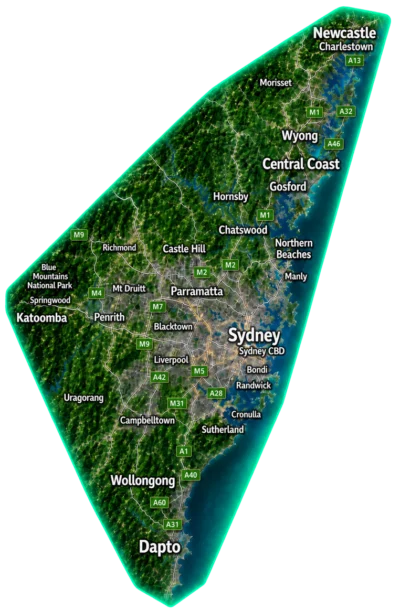
AREAS WE SERVICE
ACROSS SYDNEY.
We assess and repair concrete cracking across Sydney, with wider coverage along the Newcastle–Central Coast–Sydney–Wollongong corridor. Contact us about your building, property or concrete structure.
Common Service Areas Include: Chatswood, North Sydney, Ryde, Parramatta, Castle Hill, Bella Vista, Hornsby, Brookvale, Mona Vale, Bondi, Randwick, Mascot, Botany, Alexandria, Miranda, Hurstville, Kogarah, Liverpool, Bankstown, Campbelltown, Blacktown, Penrith, Wetherill Park, Silverwater, Seven Hills, Prestons and Ingleburn.

FREQUENTLY ASKED QUESTIONS
View all FAQsWhat Causes Cracks In Concrete?
Concrete can crack because of drying shrinkage, thermal effects, loading, movement, settlement, corrosion or construction-related factors. The pattern, width, location and surrounding conditions help establish which factors may be involved.
Should A Moving Crack Be Repaired Immediately?
The cause and rate of movement should be assessed first. Some cracks need monitoring before a repair is selected; others need prompt investigation or measures to manage the affected area. The next step depends on the individual structure and its condition.
Can You Repair Leaking Concrete Cracks?
Water-bearing cracks may be treated with a suitable polyurethane injection system or another waterproofing approach. The crack path, movement, water source and site conditions determine the repair scope.
Can Cracks Lead To Concrete Cancer?
Cracks can allow water and contaminants to reach reinforcing steel. Where corrosion develops, expansion can cause further cracking, delamination and spalling. Repairs may need to address both the crack and the surrounding deteriorated concrete.
How Long Do Crack Repairs Take?
Timeframes depend on access, the number and extent of cracks, preparation, repair method, curing and whether the work must be staged around occupants or operations.
Do You Provide Engineering Reports?
Site observations and a quotation are different from a formal structural engineering report. If structural design, assessment or certification is required, the necessary engineering input is discussed as part of the project scope.
How Do You Know Whether A Crack Is Structural?
Appearance alone does not establish structural significance. Location, loading, displacement and changes over time must be considered. Where structural concerns exist, appropriately qualified engineering assessment may be needed before selecting a repair.
What Is Epoxy Crack Injection?
Epoxy injection introduces a suitable resin into a crack to bond the sides and restore continuity where the repair design requires it. It is generally considered for stable cracks, with moisture conditions and material suitability checked before work.
What Is Crack Stitching?
Crack stitching installs reinforcement across a crack to help transfer load and stabilise a specified repair. Bar type, anchorage, spacing and bonding system depend on the substrate, structural requirements and repair design.
Do All Concrete Cracks Need Repair?
Not every crack needs the same treatment. An assessment helps establish whether monitoring, sealing, structural repair or no immediate intervention is appropriate.
Can Cracks Be Repaired Without Replacing The Concrete?
Suitable cracks may be repaired with injection, stitching, sealing or local patch repairs. More extensive deterioration can require removal and reinstatement of damaged concrete.
How Do I Arrange A Crack Inspection?
Use the inspection form on this page or call 0424 408 330. Include the property location, photographs, a description of the cracking and any reports or plans. Tell us if the crack is changing or allowing water through.

NEED A CRACK ASSESSED
BEFORE YOU REPAIR?
Speak with our Sydney concrete crack repair team about the right next step.
CALL OR SMS OUR TEAM
0424 408 330