


Underwater concrete spalling repairs
Underwater concrete spalling assessment and repair planning for Sydney’s wharves, jetties and marine piles.
Assess the damage
Detailed underwater inspections to map the extent of spalling.
Examine exposed steel
Assess reinforcement condition and potential structural implications.
Plan the right repair
Match repair methods to the pile, exposure and site conditions.
What causes concrete cancer underwater?
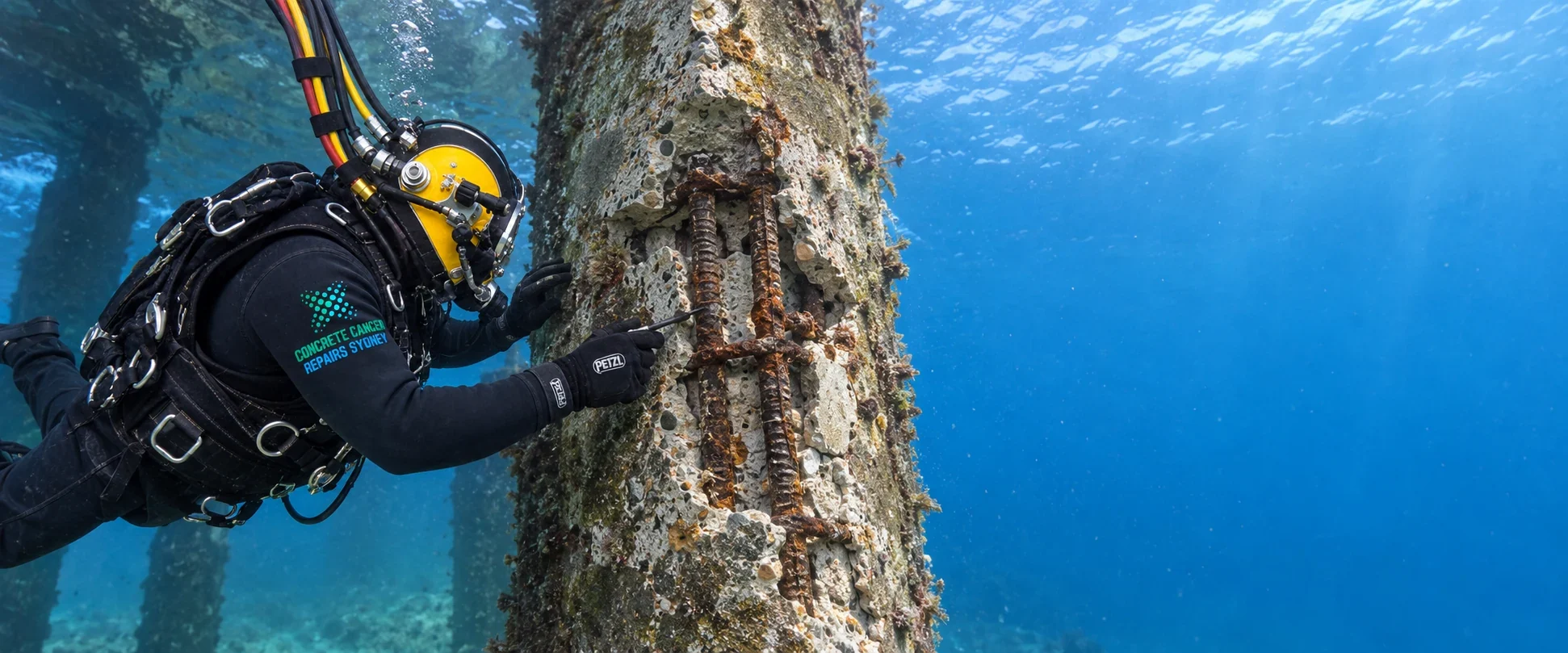
In Sydney’s marine environment, chlorides can penetrate concrete and disrupt the protection around reinforcing steel. Where moisture and oxygen are available, corrosion can develop. Expanding corrosion products can crack the cover concrete and cause it to break away.
Tidal and splash zones are particularly exposed. Permanently submerged areas can behave differently, so an inspection should establish the cause and extent of deterioration.
Before selecting a repair, document each affected pile’s location, exposure zone and the depth of concrete loss. Photographs and reinforcement measurements help define the extent of damage, while marine growth, tides and poor visibility may conceal defects. Where major section loss is suspected, further investigation may be needed to determine the repair scope.
The key takeaway
Underwater concrete spalling can affect the durability and capacity of marine structures. Clear inspection records, assessment of the underlying cause and a properly specified repair help owners plan the next step for Sydney’s wharves, jetties and marine assets. Keeping these findings together also gives owners a clearer basis for prioritising affected areas, discussing any further assessment with their engineer and coordinating the proposed work around the access requirements and operating conditions of the marine asset.
Identifying spalling & corroded reinforcement
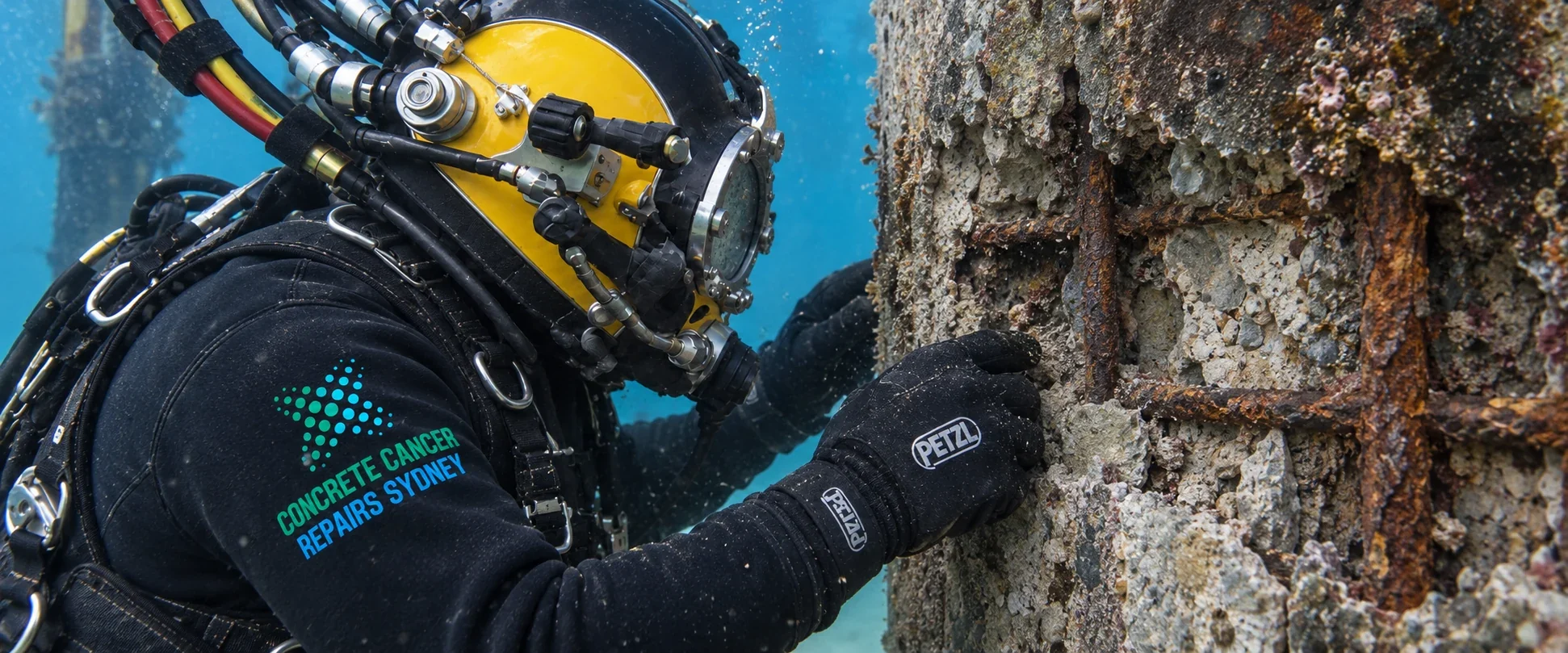
Underwater spalling can appear as irregular cavities, fractured edges and exposed reinforcement. Marine growth can hide the full extent of damage. Inspection records should identify the location, dimensions and condition of each affected area.
Loss of concrete cover or fractured edges
Map fractured edges and record the depth and spread of missing cover concrete.
Exposed reinforcement with visible corrosion
Document visible rust, exposed bars and any apparent reduction in steel section.
Hollow-sounding or delaminated areas identified during inspection
Use sounding and selective cleaning to locate deterioration hidden by marine growth.
Our underwater repair process
A planned approach, from condition assessment through to completion checks.
Survey & map
Record pile locations, defects and measurements. Establish the repair scope and any structural assessment required.
Remove unsound concrete
Plan controlled preparation to expose a suitable substrate, with staging and support where the design requires it.
Prepare & restore
Address reinforcement condition and reinstate the section using the specified underwater repair system.
Verify & monitor
Document installation checks and completed repairs, then set an inspection plan appropriate to the asset.
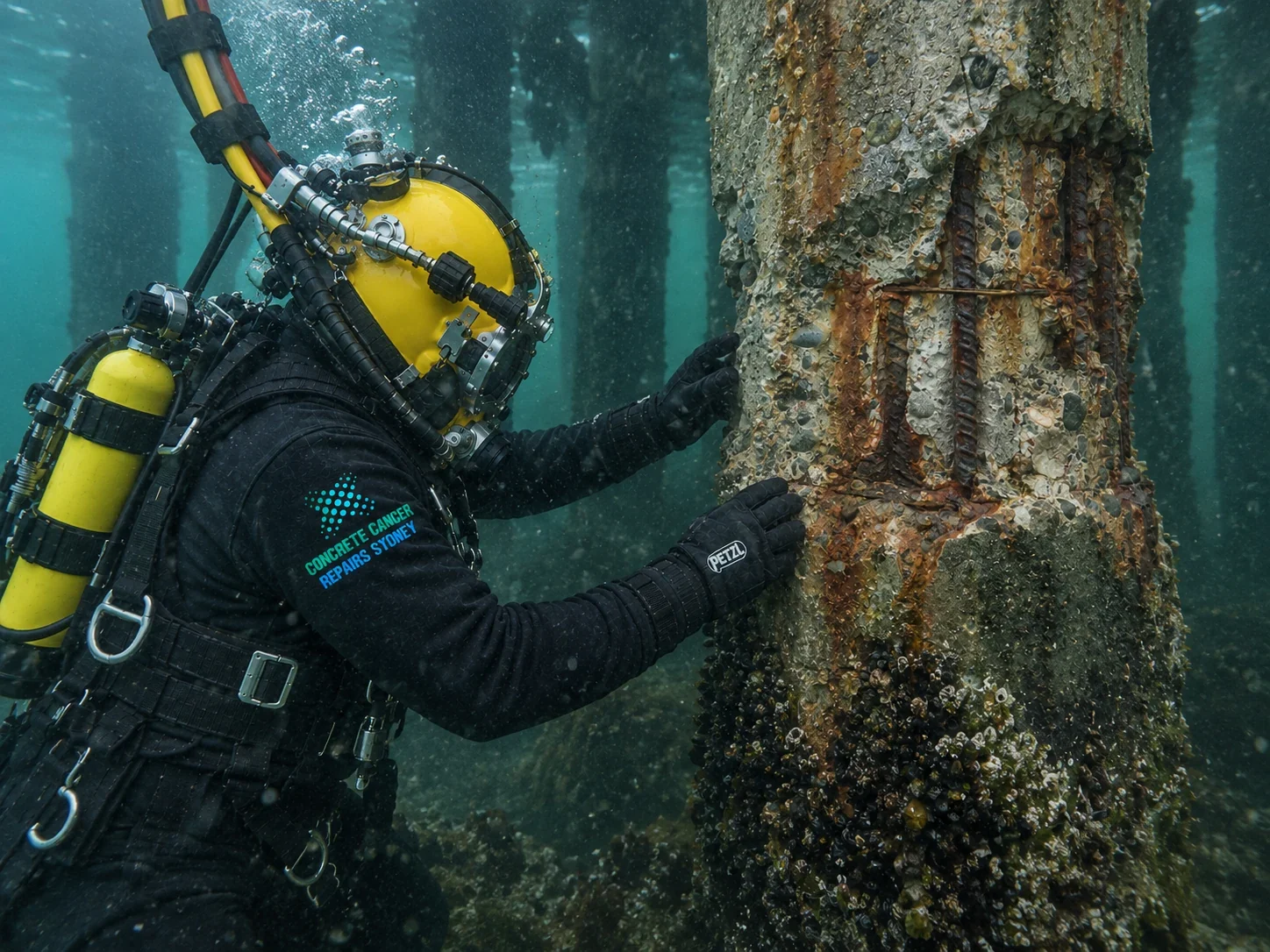
What your inspection helps establish
Inspection records help define the affected piles, the extent of visible deterioration and the information needed to plan repairs. The agreed scope, access and underwater visibility determine what can be recorded and whether further assessment is required.
Pile locations & defect records
Identify affected piles and record the location and spread of visible damage.
Spalling dimensions & depth
Capture measurements that help establish the preparation and reinstatement scope.
Reinforcement observations
Document exposed bars, corrosion and indications of section loss for further assessment.
Photographs, video & next steps
Keep available images and location notes together for scope discussions, engineering review and quotation preparation.
What shapes the repair scope?
Extent and location of spalling
The size, depth and distribution of damaged areas determine how much preparation and reinstatement is required.
Remaining section and structural requirements
Pile and reinforcement condition inform the need for engineering assessment and structural repair.
Tides, currents, access and material suitability
Site conditions influence access, work windows and the choice of underwater repair materials.
Durability and ongoing inspection needs
Exposure, completion records and future inspections form part of the repair plan.
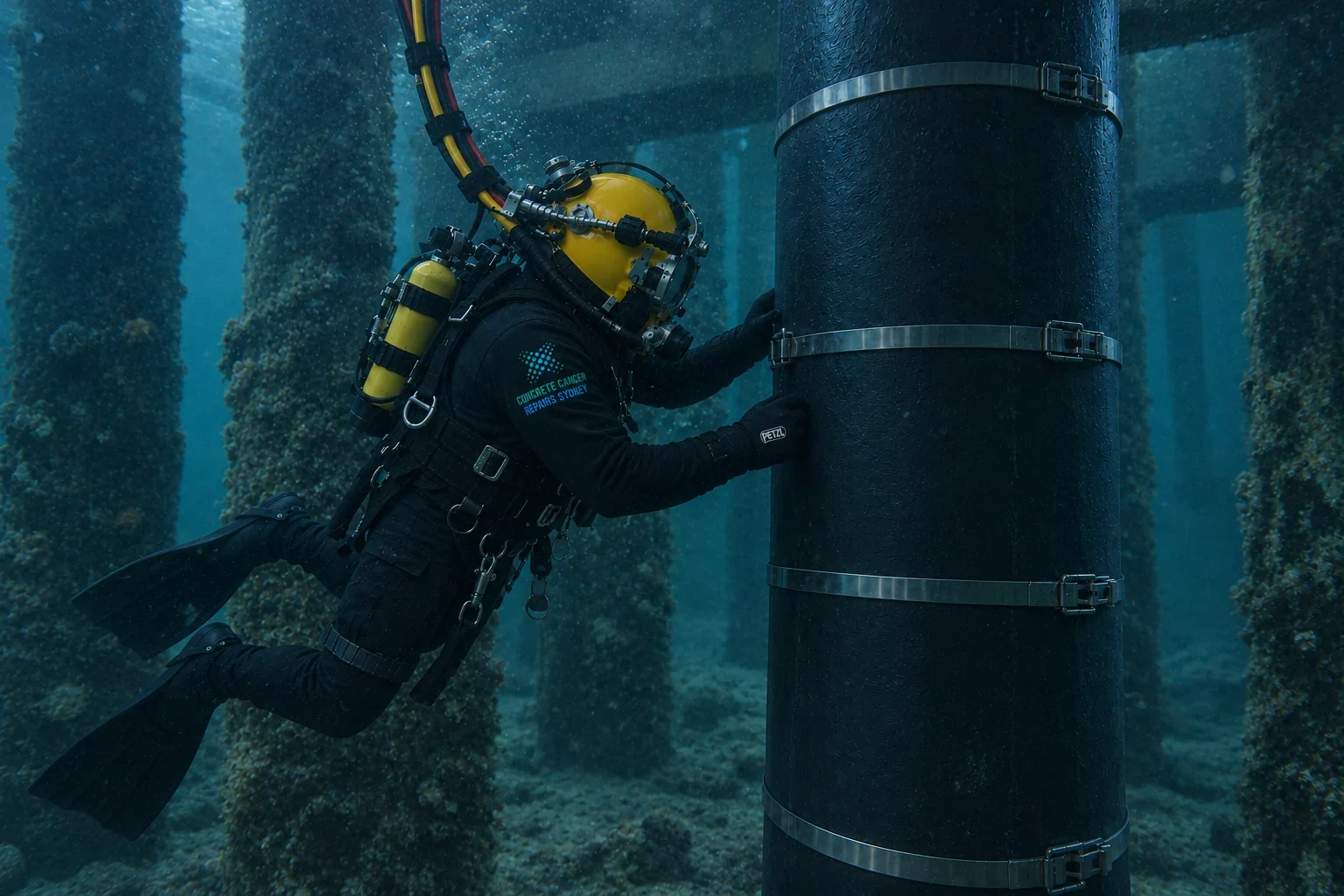
Let’s assess your marine structure
Already have an engineer’s report, defect schedule or tender scope? Share the documents, drawings and pile locations so our team can review the proposed repairs, access requirements and timing before discussing a quotation.
Reports, drawings & tender scope
Share engineering reports, defect schedules, drawings and available dive records.
Pile locations & access
Identify affected piles, site access and marine or operational restrictions.
Scope, staging & timing
Outline the proposed work, key dates and staging around site operations.
Underwater spalling repairs FAQs
What causes concrete to spall on underwater marine piles?
Chloride exposure can contribute to reinforcement corrosion, which expands and can fracture the surrounding concrete. The causes and extent of damage should be confirmed through a suitable inspection.
Can spalled concrete piles be repaired underwater?
In some situations, yes. Depending on the remaining pile and reinforcement condition, options can include localised reinstatement, formed repairs or an engineered pile jacket system.
How are damaged underwater piles inspected?
A commercial dive inspection can record visible defects, cavity dimensions, exposed reinforcement and the location of damage. An engineer may recommend further testing where structural capacity is in question.
Which materials are used for underwater spalling repairs?
The specified system may involve underwater-grade repair mortar, grout, formed concrete repairs or a pile jacket. Materials must be suitable for the actual placement conditions and required durability.
Do damaged marine piles always need strengthening?
No. Some defects may be addressed through localised repairs, while more extensive section loss can require an engineered strengthening solution. An assessment is needed before determining the appropriate scope.
Can underwater repairs be planned around tides and wharf operations?
Repair planning can account for tides, currents, visibility, safe dive access and site operations. The work sequence and any operating restrictions depend on the particular marine structure.
What information helps with an underwater pile repair enquiry?
Provide the structure’s location, available photographs or dive inspection records, any engineering report and details of access or operating restrictions. This helps establish the next steps for assessment.