



Marine Wharf Pile Remediation & Protection
A 24-pile section of reinforced-concrete wharf infrastructure remediated through the tidal and splash zones using staged marine access, structural concrete repairs and dedicated waterline pile protection.
PROJECT 02 • SYDNEY HARBOUR
Project Overview
THE PROBLEM
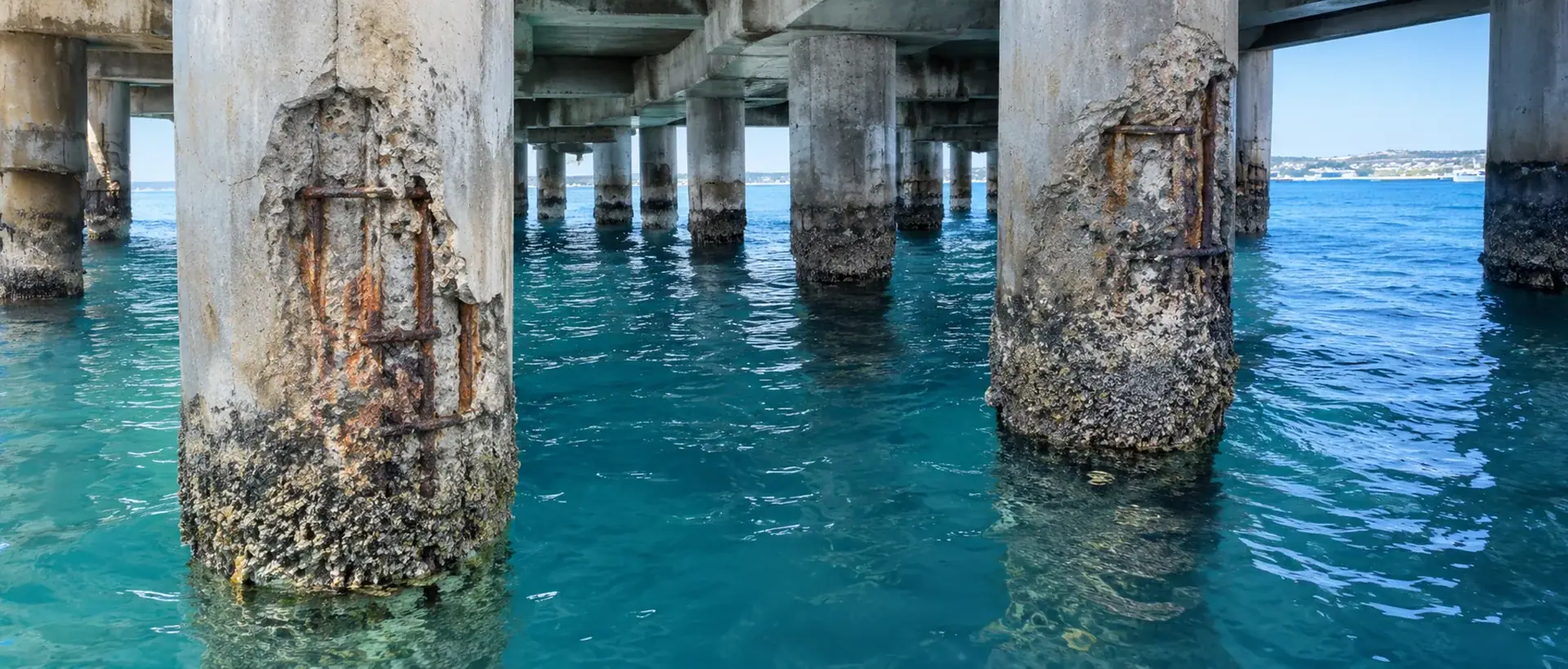
Chloride exposure and tidal cycling caused spalling, cracking and reinforcement corrosion across a 24-pile section of the wharf.
THE REPAIR
Piles were accessed from marine work platforms, deteriorated concrete removed, reinforcement remediated and structural profiles rebuilt before tidal-zone pile jackets were installed.
THE OUTCOME
Twenty-four reinforced-concrete piles were progressively repaired and protected, restoring damaged sections and improving durability through the tidal and splash zones.
SITE CONDITIONS
Marine access, tidal working windows, debris containment and curing protection governed the sequence throughout the 18-week programme.
24-PILE WHARF SECTION • BEFORE & AFTER
Structural Repairs Complete. Tidal Zones Protected.
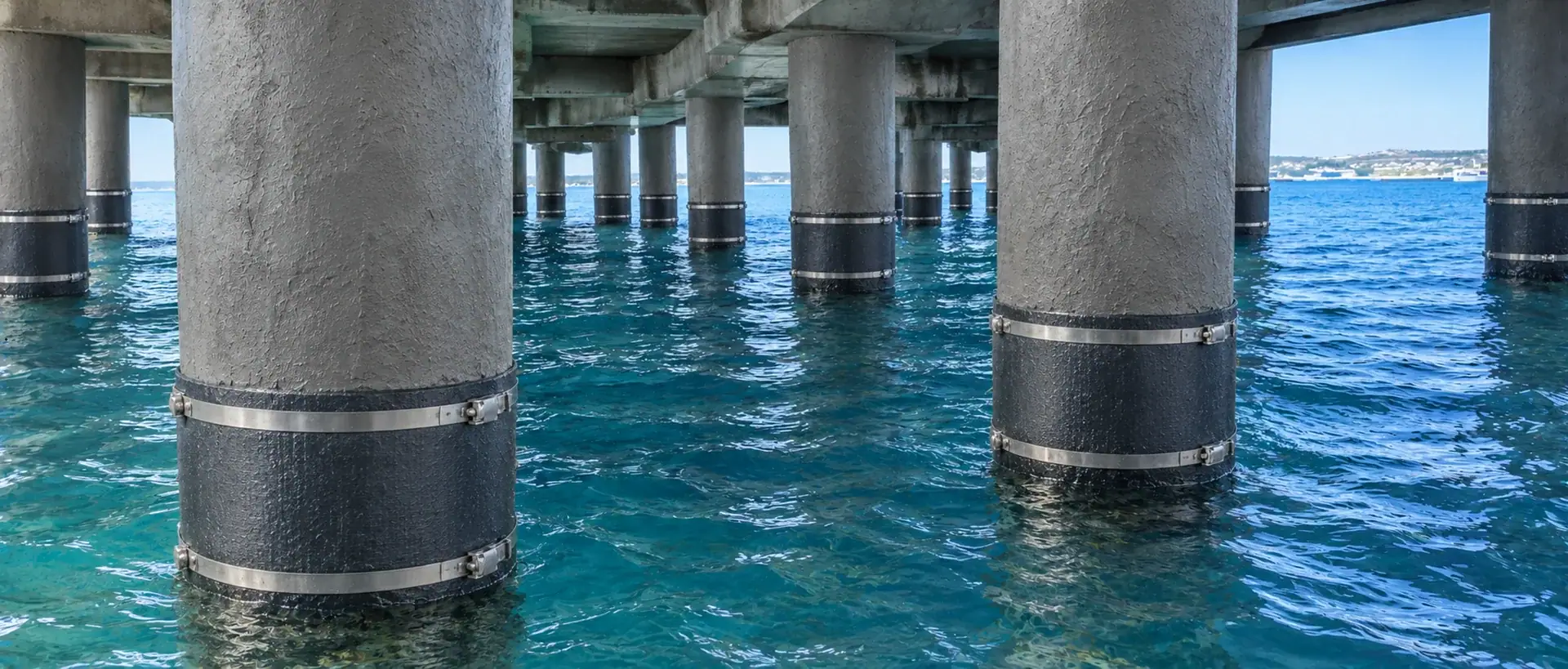
The before image shows a representative view of the 24-pile work area, including advanced spalling, exposed reinforcement and heavy marine growth. The completed view shows repaired pile profiles and a consistent banded pile-protection system through the vulnerable tidal zones.
24-PILE MARINE CONCRETE REMEDIATION
Scope of Works
The scope covered 24 reinforced-concrete piles with repair quantities varying according to condition. The most deteriorated areas required breakout and steel remediation, while the full work area received staged waterline protection suited to the marine exposure.
Marine Access Setup
Work pontoons were progressively positioned through the wharf bay to provide safe access for inspection, preparation, breakout, steel treatment, reinstatement and pile-protection works.
Marine Growth Removal
Barnacles, shell growth and surface contamination were removed from the repair interfaces so the underlying concrete condition could be properly assessed.
Controlled Breakout
Delaminated and unsound concrete was removed back to sound substrate, including behind corroded reinforcement where deterioration extended beyond the visible spalls.
Reinforcement Remediation
Exposed reinforcement was mechanically cleaned and assessed. Steel with significant loss of section was supplemented or replaced where required before reinstatement.
Structural Reinstatement
Damaged pile sections were rebuilt with compatible marine-grade cementitious repair material, restoring concrete cover, local geometry and full encapsulation around prepared reinforcement.
Tidal-Zone Protection
Banded marine pile-jacket systems were installed around the lower sections of all 24 treated piles to protect the highest-exposure waterline interfaces and provide a consistent durability strategy.
18-WEEK DELIVERY PROGRAMME
How the Works Were Staged
Inspection, access & setup
Confirm repair boundaries across the 24-pile work area, establish pontoon access, remove marine growth and implement environmental controls.
Breakout & steel exposure
Progressively remove unsound concrete from identified repair zones, expose affected reinforcement and prepare sound repair edges.
Steel remediation & rebuilding
Clean and assess reinforcement, supplement steel where required and reconstruct deteriorated pile sections in controlled stages.
Pile protection & curing
Install the tidal-zone pile protection systems progressively, maintain curing controls and complete interfaces around the waterline.
QA, finishing & demobilisation
Complete final inspections across the 24-pile work area, verify jacket interfaces and repair finishes, then remove temporary controls and demobilise.
WORKING AT THE TIDAL INTERFACE
Marine Access & Environmental Controls
Repairing concrete at the waterline requires more than simply reaching the damaged surface. The work sequence was planned around changing water levels, safe pontoon positioning and protection of the harbour below.
Debris and slurry were contained during breakout and cleaning. Repair stages were timed so freshly placed material was not left exposed to uncontrolled wave action before it had reached the required condition.
REPAIR DETAIL
Why the Tidal Zone Needed Extra Protection
The waterline is particularly aggressive because the concrete repeatedly cycles between wet and dry conditions while remaining exposed to chlorides. Rebuilding the concrete restores the pile profile, but the lower zone also benefits from dedicated physical protection and controlled curing.
Prepared steel was fully surrounded by new repair material with restored concrete cover.
Lost concrete sections were rebuilt to a continuous circular structural profile rather than left as isolated patch edges.
The treated piles received banded marine jacket systems through the highest-exposure tidal zones to provide a consistent physical protection layer.
COMPLETED PROJECT 02
Project Outcome
The 24-pile wharf section was progressively remediated, with damaged concrete repaired where required, affected reinforcement re-encapsulated and the vulnerable waterline zones provided with a consistent pile-protection system. The works addressed both local structural deterioration and the broader durability demands of the marine exposure.
Project Images
MARINE CONCRETE DAMAGE?
Arrange an Inspection
CCRS inspects and repairs deteriorated reinforced concrete across wharves, marine structures and waterfront assets throughout Sydney and NSW.