



Underwater Concrete Pile Repairs Sydney
How damaged wharf piles are inspected, repaired and protected for long-term durability in Sydney’s marine environment.
Specialist inspection
Understand the damage above and below the waterline.
Proven repair methods
Match the repair system to the pile and its exposure.
Long-term asset protection
Plan quality checks and ongoing condition monitoring.
Why underwater piles deteriorate
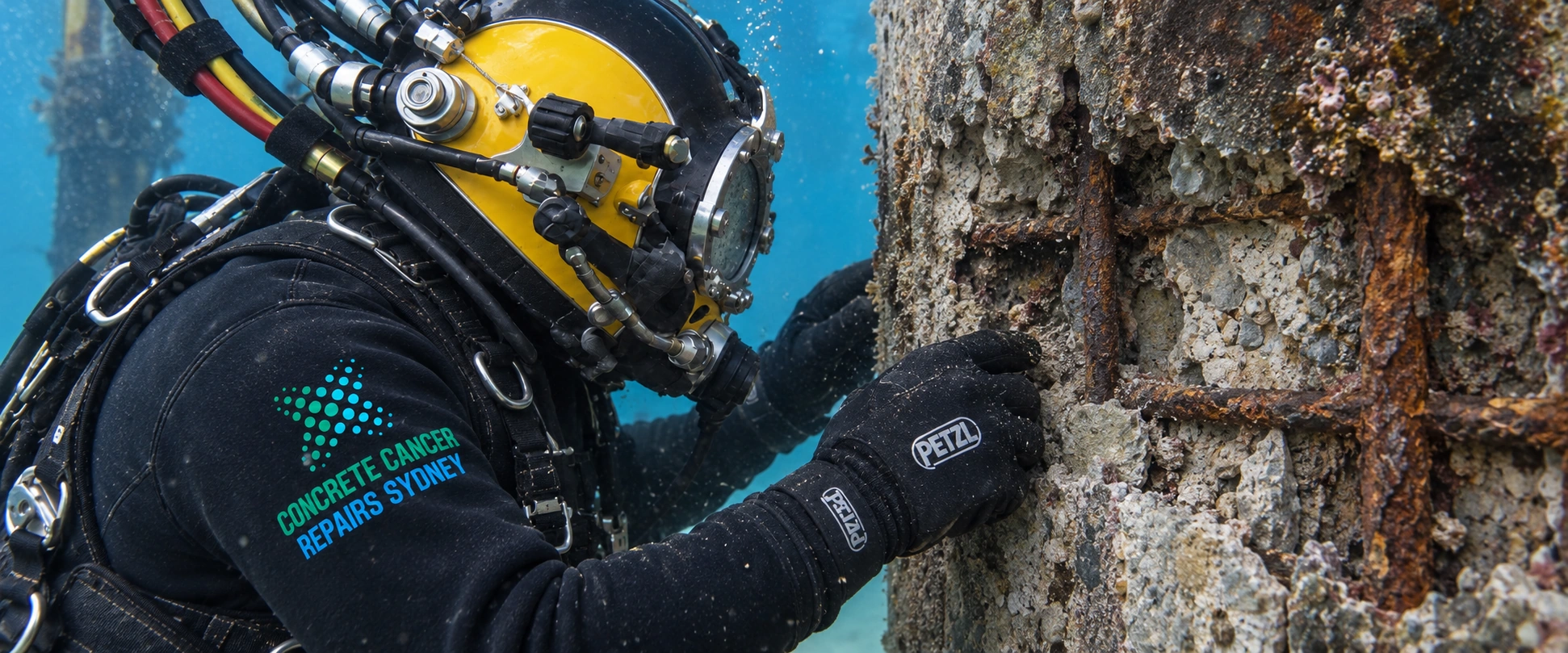
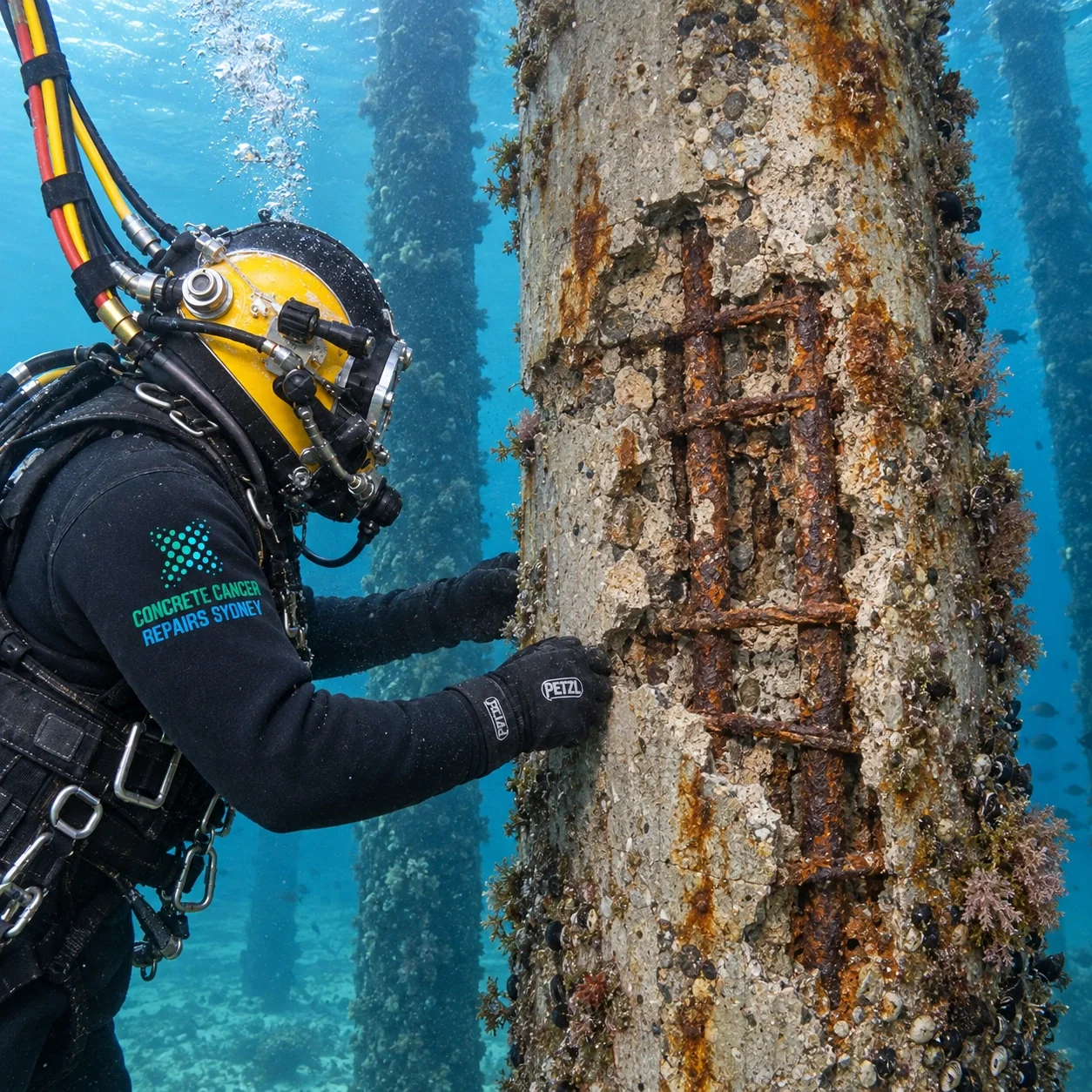
Saltwater exposure can allow chlorides to reach the steel inside a concrete pile. Where conditions support corrosion, the expanding corrosion products can crack and spall the surrounding concrete. Damage may also involve impact, abrasion, defects in the original concrete or failed earlier repairs.
Exposure varies along the pile. The tidal and splash zones experience repeated wetting and drying; permanently submerged concrete has different conditions. An inspection should consider all of these zones.
Start with the condition of the pile
Effective underwater concrete pile repairs start with understanding the damage. A defined repair scope, suitable materials and verified installation help owners manage the condition and service life of their marine structures.
Repair may extend the useful life of an existing pile where its condition and an engineered solution make that practical. Where deterioration is too extensive, strengthening or replacement may need to be considered.
An inspection should map spalling depth, exposed reinforcement and damage across tidal, splash and submerged zones. This guides the repair scope, marine access and completion checks.
Inspection & assessment
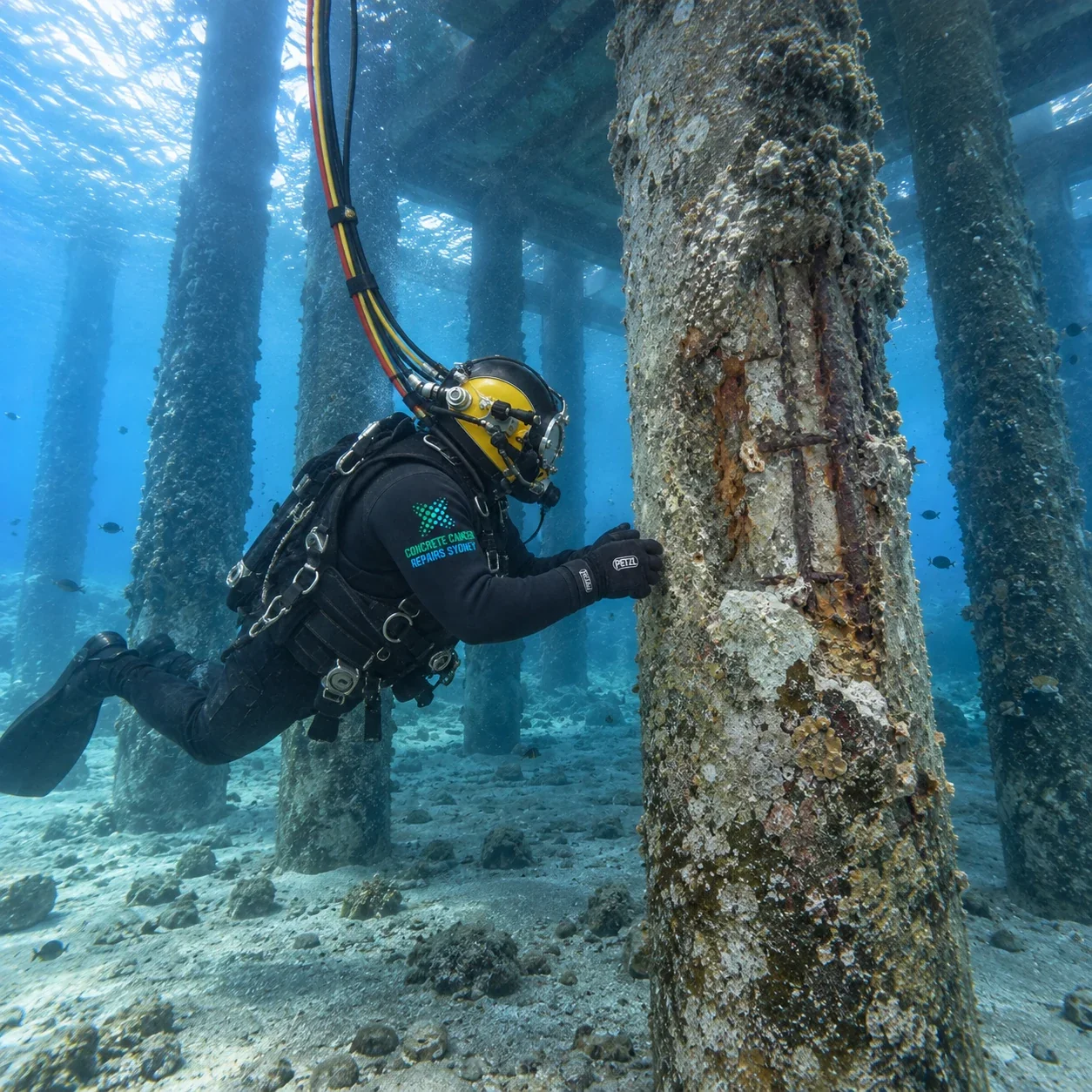
Repair planning starts with a clear record of the existing structure. An underwater inspection can locate cracking, spalling, exposed reinforcement and changes in pile section. Cleaning selected areas may be needed to see beneath marine growth.
Map the position and extent of damage
Assess concrete and reinforcement
Record photographs and findings
Findings should be mapped to individual piles and reviewed against the structure’s loads, construction and repair history. Where necessary, an engineer can specify further testing before the repair scope is finalised.
Our underwater pile repair process
Inspect & plan
Record pile condition, confirm the engineering scope and plan access around tides, visibility and site operations.
Remove & prepare
Carry out the specified preparation and checks before covering the repair area. Confirm changes in the exposed condition.
Repair & restore
Install the agreed repair system, with compatible materials and any reinforcement or jacket detailed in the design.
Verify & monitor
Document the completed work, installation checks and future inspection requirements for the asset owner.
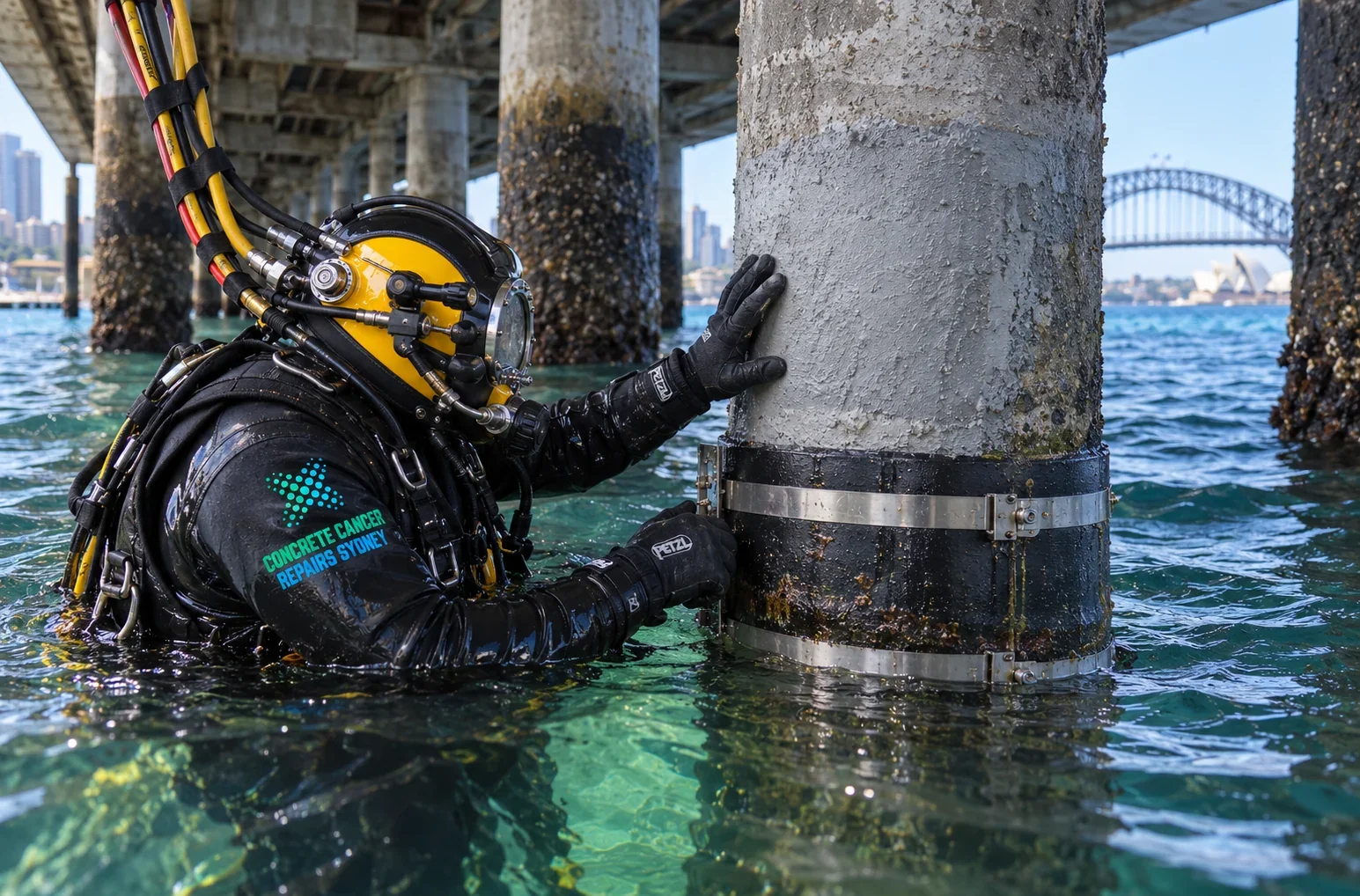
Protecting Sydney’s wharves
Wharves, jetties, terminals and other marine structures need a repair strategy that reflects how they are used. For asset owners and operators, the scope should address structural requirements, continued exposure, access and disruption to the site.
Plan ongoing protection
Consider corrosion protection beyond the visible damage and the needs of the existing structure.
Coordinate marine access
Plan work around tides, access and the wharf’s operating requirements.
Keep repair records
Retain completion records and plan future inspections with the asset owner.
What affects underwater pile repair costs?
Pile condition
Depth and extent of damage, remaining concrete and reinforcement determine the required preparation.
Repair size & quantity
Pile dimensions, repair depth and the number of piles affect the amount of work.
Dive access & tides
Water depth, visibility, tides and site operations influence access and staging.
Specified repair system
Containment, repair materials and engineering requirements depend on the individual structure.
Need expert advice on your wharf piles?
Send us your photos, pile drawings or inspection report. We can discuss the condition of your wharf piles, repair requirements and next steps for your project.
Photos & reports
Share recent photos, inspection findings or an engineer’s report.
Site location & access
Tell us where the structure is and how the repair area can be reached.
Repair scope & timing
Outline the affected areas, planned works and preferred timeframe.
Underwater pile repairs FAQs
Can concrete piles be repaired underwater?
Yes, suitable systems allow some repairs to be completed while the pile remains submerged. The method depends on the damage, water conditions, access and required performance. Some scopes may be better completed within a dewatered work area.
Does every damaged pile need a jacket?
No. Localised repairs, formed repairs, jackets, strengthening or replacement may be considered. Selection follows inspection and engineering review. The visible size of a defect alone is not enough to choose a system.
Can pile repairs restore structural capacity?
An engineered repair can be designed to meet specific structural requirements, but capacity cannot be assumed from the finished surface or the presence of a jacket. The remaining concrete, reinforcement, connections and load transfer all need consideration.
What affects the cost of underwater pile repairs?
Key factors include the number and size of piles, depth and extent of damage, dive access, tides, visibility, containment, repair materials and engineering requirements. Photos, pile drawings and inspection reports help define a meaningful scope before pricing.
How often should repaired piles be inspected?
The inspection interval should reflect the repair design, exposure, condition and use of the structure. Keep a baseline record after completion and review the plan with the asset owner’s engineer. New impact damage or a noticeable change in condition may warrant an earlier assessment.
Does a free site inspection include an underwater dive survey?
A detailed underwater survey, testing or engineering assessment may need a separate scope and fee. Share the site details and existing reports first so the appropriate inspection approach can be discussed and any additional work agreed before proceeding.
Technical references
- FHWA — Underwater Bridge Inspection Reference Manual (2024)
- FHWA — Underwater Bridge Repair, Rehabilitation, and Countermeasures Reference Manual
- Sika Australia — SikaGrout UW product information
General technical background. The repair design and specification must suit the individual asset and local project requirements.