



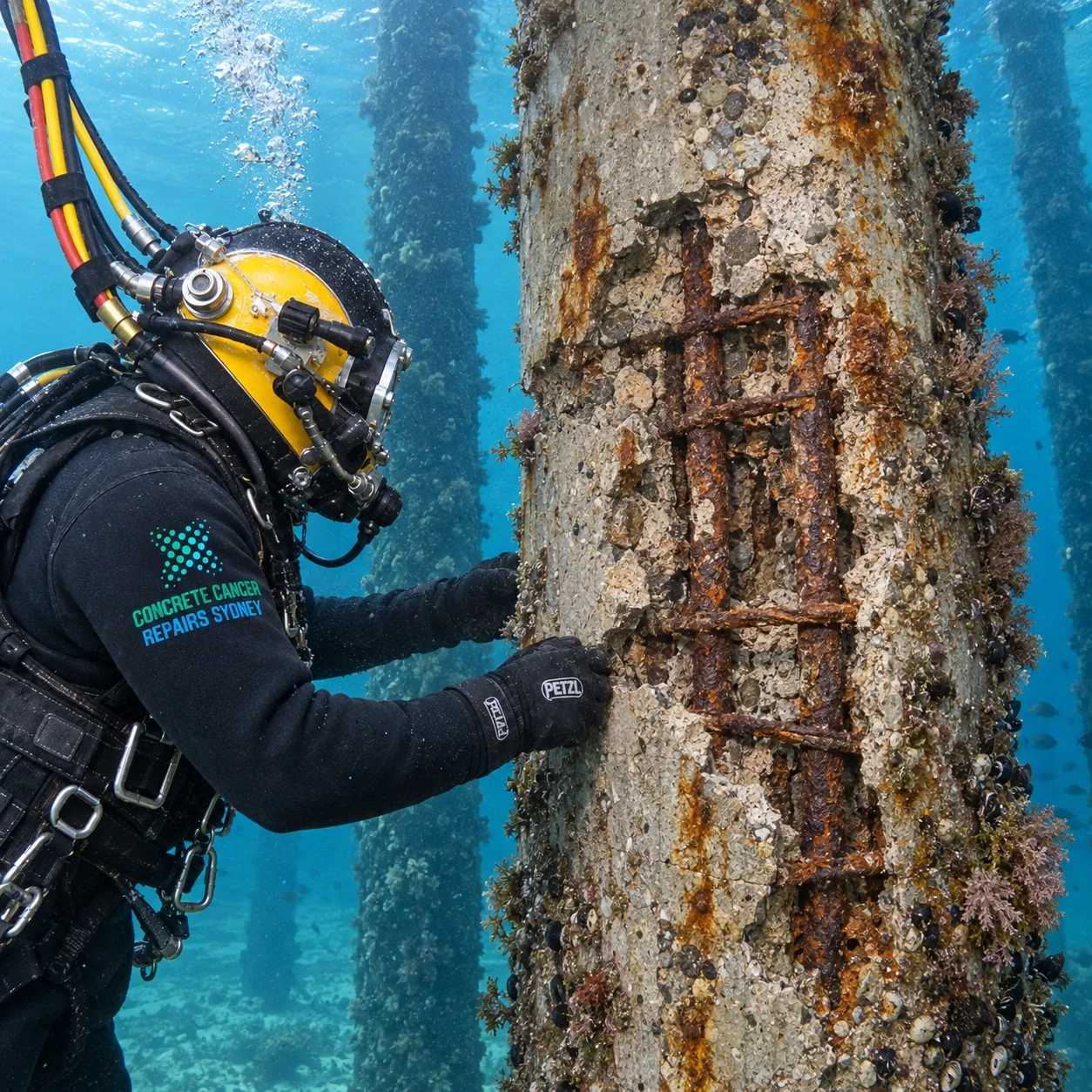
Underwater concreteinspections
How commercial divers identify concrete cancer, document submerged damage and provide the information needed for marine repair and asset planning.
Detailed condition checks
Record visible damage and areas needing closer investigation.
Planned dive inspections
Match the inspection scope to the asset and site conditions.
Clear inspection records
Connect photographs and measurements to identifiable locations.
Why underwaterinspections matter
A wharf or jetty can look serviceable above the water while its submerged piles need attention. Underwater inspections help establish the condition of areas that cannot be assessed properly from the deck.
For owners and managers of Sydney marine assets, a documented inspection provides a starting point for prioritising maintenance, planning further investigation and developing a repair scope.
Start with a clear scope
Agree which structures and areas need to be inspected, the information required and how findings will be recorded. Available drawings and earlier reports help connect the new inspection to the asset’s history.
Document water visibility, marine growth and access limitations, and distinguish visible defects from areas requiring further measurements or engineering review. This makes the report more useful for repair planning.
What we look forduring an inspection
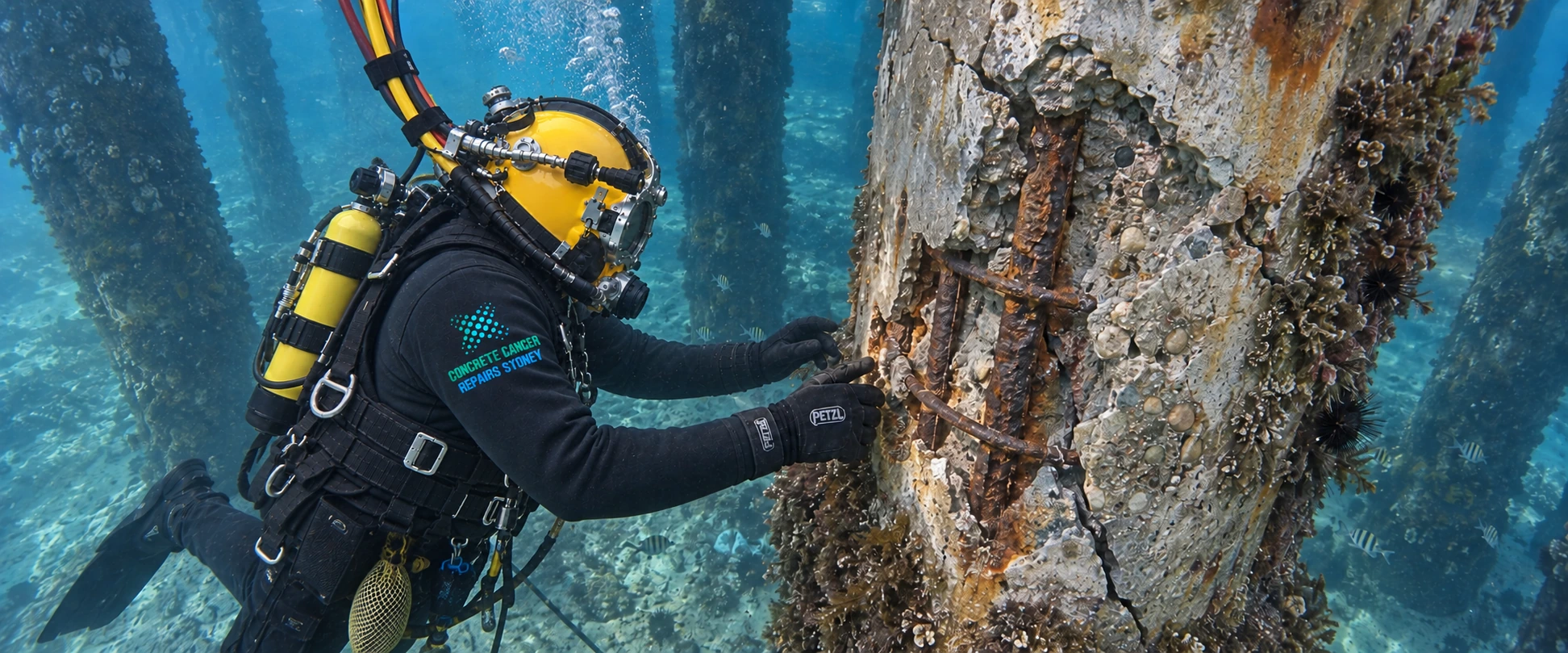
The inspection records the type, location and extent of observable defects. Coverage is agreed in advance, with any inaccessible or obscured areas clearly identified in the report.
Visible structural damage
Concrete spalling, exposed reinforcement and active corrosion.
Surface & movement defects
Cracks, delamination, loose concrete and displacement near the seabed.
Marine obstructions & previous repairs
Marine growth, pile jackets, joints and earlier repair areas.
Our 4-step inspection process
Site briefing
Review drawings, earlier reports, inspection objectives, access and operational constraints.
Underwater inspection
Inspect the agreed areas and record defects using suitable visual, tactile and imaging methods.
Analysis & reporting
Organise observations, photographs and measurements into a location-based condition record.
Recommendations
Identify priorities for engineering review, further investigation, maintenance or repair planning.
Reporting for engineers& asset managers
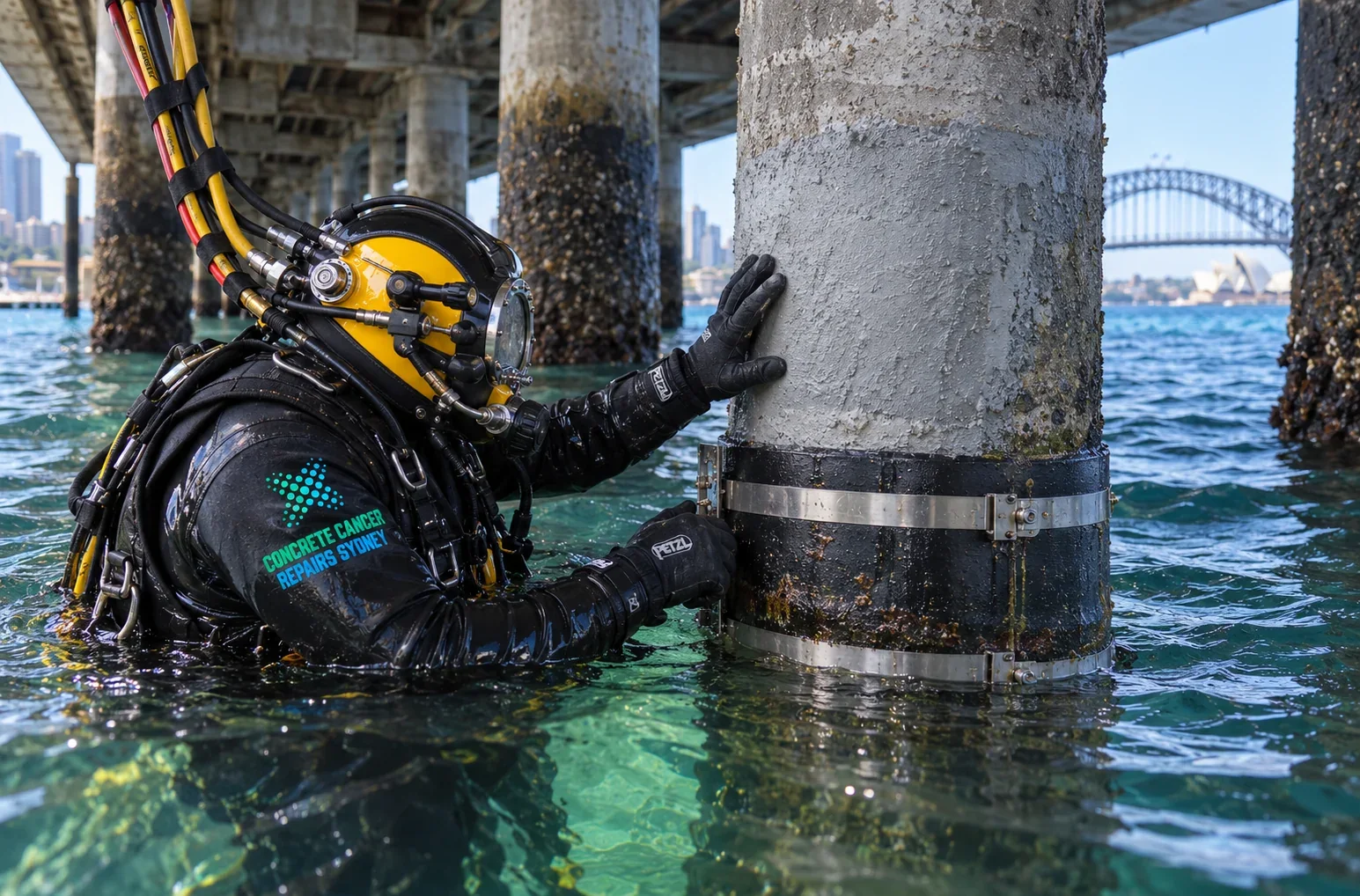
A useful report makes each observation traceable to the structure. Agree the asset references, required deliverables and reporting format before the inspection, especially where the information will support an engineer’s repair design.
Traceable visual records
Photographs, video and marked references linked to each inspected area.
Engineering-ready defect reporting
Defect descriptions, dimensions and location records organised for technical review.
Scope, limitations & next steps
Inspection conditions, inaccessible areas and recommended follow-up actions clearly documented.
What to prepare before an inspection
Drawings & reports
Share available plans, pile schedules, earlier inspection reports and repair records.
Location & access
Confirm the site location, access arrangements and any operational restrictions.
Known concerns
Send photographs and details of visible damage, recent impacts or changes in condition.
Objectives & timing
Explain why the inspection is needed, your reporting requirements and preferred timeframe.

Let’s assess yourmarine structure
Concerned about underwater spalling or deteriorating concrete? Share your site location, photographs and any inspection or engineering reports. Our team can discuss the information available and the next steps for assessment.
Photos & reports
Share photographs, inspection records or an engineer’s scope.
Location & access
Tell us where the structure is and how the affected piles can be accessed.
Repair scope & timing
Outline the affected areas and your preferred timeframe.
Frequently asked questions
How often should underwater inspections be carried out?
The interval should be set for the individual asset, considering its condition, exposure, previous findings, use and the owner’s inspection requirements. An engineer or asset manager can help establish the programme. Impact, severe weather or a noticeable change in condition may justify an earlier inspection.
What equipment is used for underwater concrete inspections?
The equipment depends on the scope and conditions. It may include suitable commercial diving equipment, underwater lighting, cameras, video and measuring tools. Specialist testing is planned separately where the engineer needs information that visual and tactile inspection cannot provide.
Can the report be used by our engineer or asset manager?
Yes—agree the required format and level of detail before the inspection. Useful deliverables include identifiable pile or element references, photographs, defect measurements, marked-up locations and a clear record of limitations. The engineer determines whether further investigation is needed before assessing capacity or designing repairs.
Do underwater inspections only apply to wharves and jetties?
No. They can also be relevant to marine piles, pontoons and associated foundations, bridge substructures and other submerged concrete assets. The inspection method and access plan depend on the structure, location and operating conditions.
How long does an inspection take, and what should we provide?
Timing depends on the number of elements, depth, visibility, marine growth, access and reporting requirements. Send the site location, available drawings, previous inspection reports and the reason for the inspection so the scope can be discussed. Specialist diving and reporting are quoted to suit the agreed scope.