




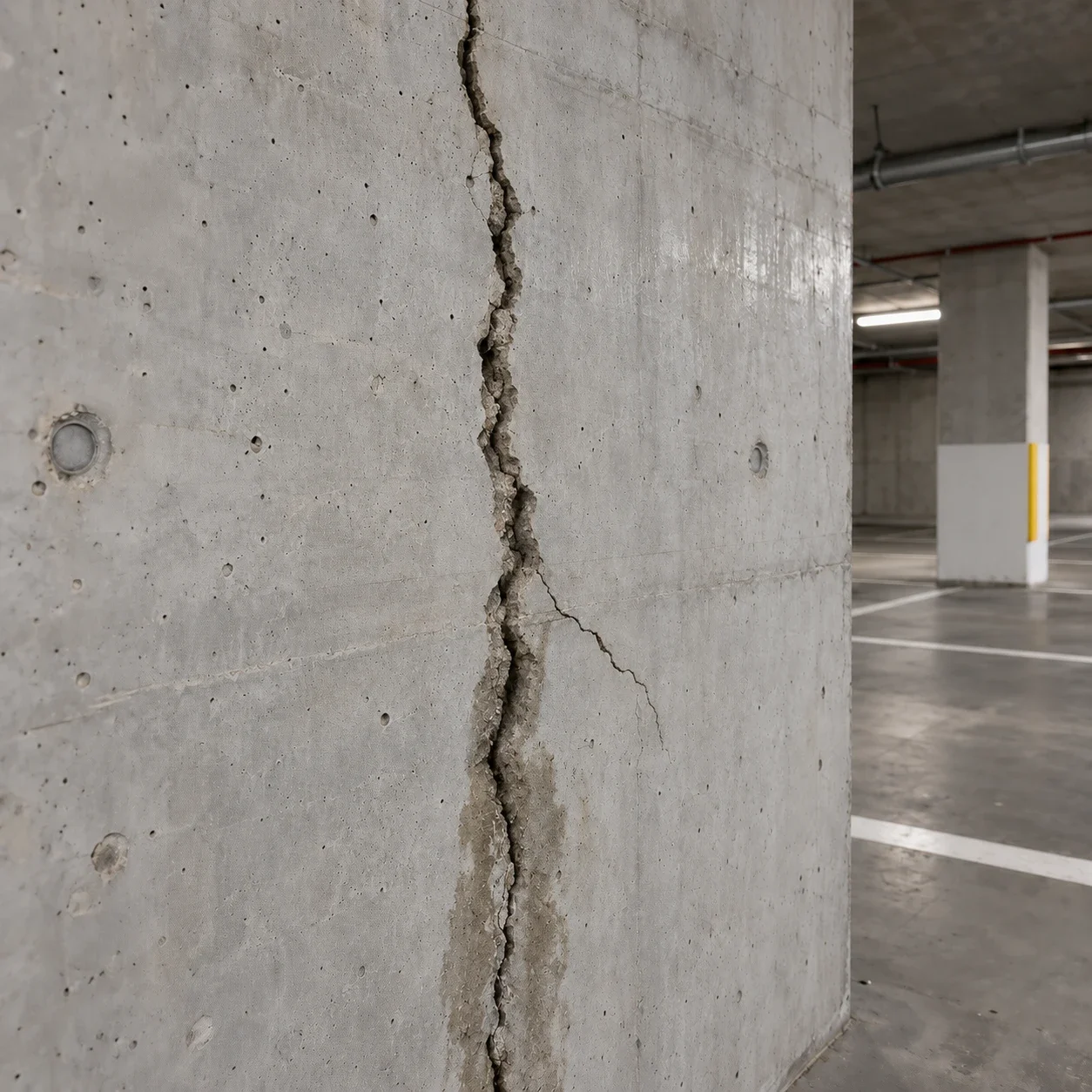
Leaking Basement:Which Repair Approach?
A wet wall does not identify the entry point or the repair method. Investigate cracks, joints, penetrations, drainage and the wall’s external protection before deciding on injection or waterproofing work.
Trace The Water
Record where and when the leak appears.
Check The Defect
Distinguish cracks, joints and broader water entry.
Define The Objective
Specify leak sealing and any structural work separately.
Start WithThe Water Path
Water can emerge at a crack after travelling through a joint or along another concealed path. A stain helps locate the symptom, but the investigation should consider the construction and what is on the other side of the wall.
Useful information includes rain patterns, groundwater observations, plumbing checks, previous injections and the condition of drains or pumps. Where safe external access is unavailable, the team may need to develop an investigation using the areas that can be reached.
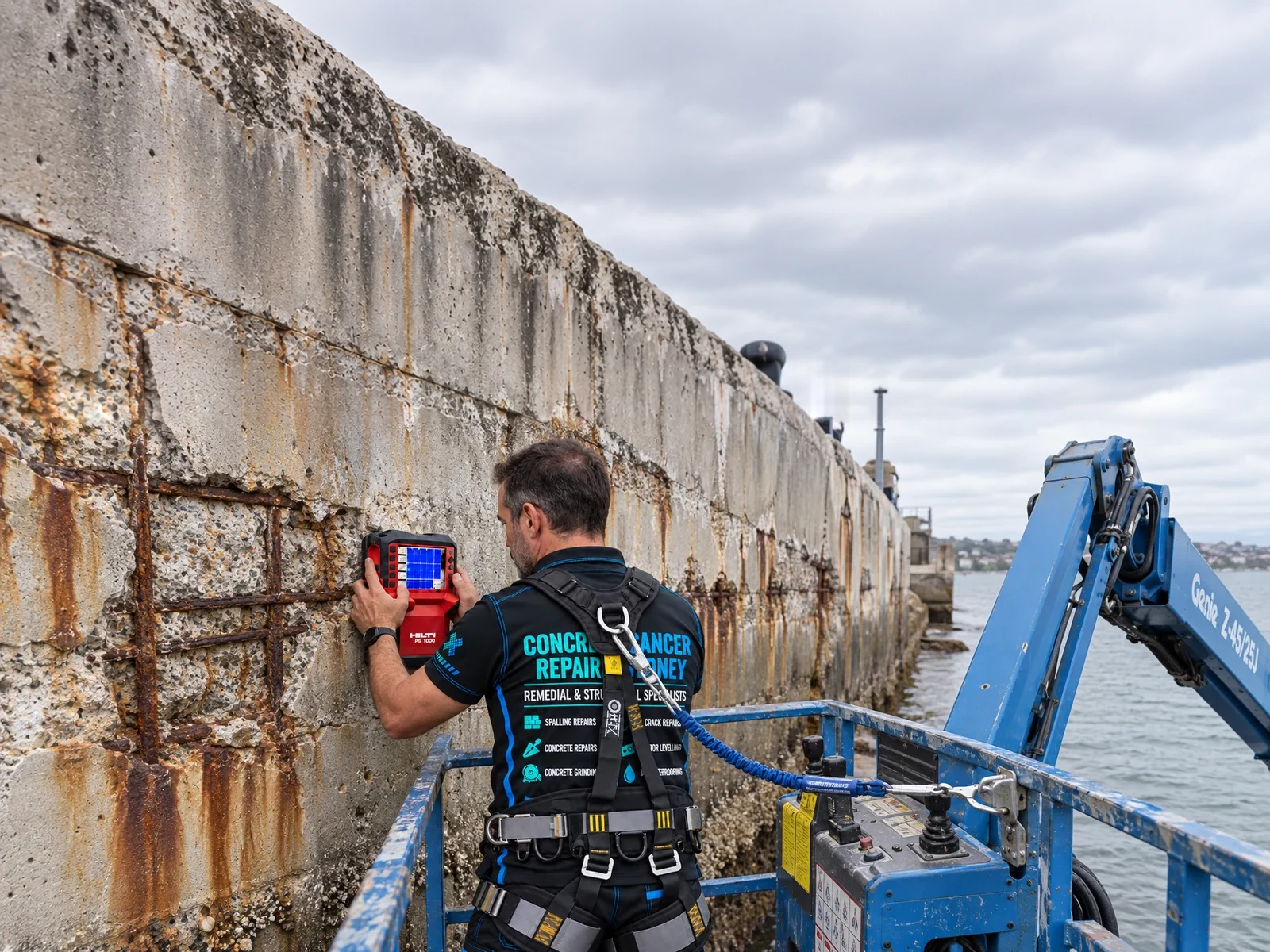
Also assess the concrete. Rust staining, loose material or exposed reinforcement may require a concrete repair scope alongside the leak treatment. Stopping visible water is not, by itself, evidence that structural deterioration has been resolved.
What Injection Is Intended To Achieve
Suitable injection systems can seal defined water paths through cracks or joints. Product selection depends on water conditions, movement and the purpose of the treatment. A rigid structural bonding resin and a flexible leak-sealing resin have different roles.
Read our epoxy and polyurethane injection comparison for the distinction.

Signs A Local TreatmentMay Not Be Enough
Widespread dampness, multiple changing leak points or repeated local sealing failures may justify a broader review. A plumbing leak also needs a different response from water entering through the external building envelope.
Leaks At Several Locations
Water Reappearing Nearby
Concrete Damage Beside Damp Areas
Water near electrical equipment or unsafe access needs prompt attention from the responsible site professionals. Do not drill a retaining wall or conduct a DIY pressure test to investigate a leak.
Develop A Basement Repair Scope
Record The Pattern
Document rainfall, leak timing and affected locations.
Inspect The Construction
Review cracks, joints, penetrations and accessible external areas.
Select The System
Define the repair objective and compatible materials.
Check Performance
Agree follow-up checks suited to the conditions and treatment.
After TheLeak Treatment
Keep the repair map and observations available for follow-up. A dry inspection during settled weather may not represent the conditions under which the leak previously occurred.
Monitor Relevant Conditions
Record changes after comparable rain or operating conditions.
Maintain Drainage
Follow the maintenance plan for outlets, pumps and drainage.
Report New Paths
Flag water appearing at different cracks or joints.
What Changes The Repair Cost?
Access
Internal access and any excavation affect delivery.
Leak Complexity
Multiple paths and concealed details increase investigation needs.
Material Selection
Movement and water conditions influence the specified system.
Associated Repairs
Concrete remediation and reinstatement need separate allowances.

Need Help WithA Leaking Basement?
Send photographs and the leak history. We can discuss an inspection and the information needed to distinguish local sealing from a wider repair scope.
Leak History
Explain rainfall patterns and previous treatments.
Location Plan
Mark cracks, joints and nearby services.
Site Access
Describe the wall location and accessible sides.