


Epoxy Or PolyurethaneCrack Injection?
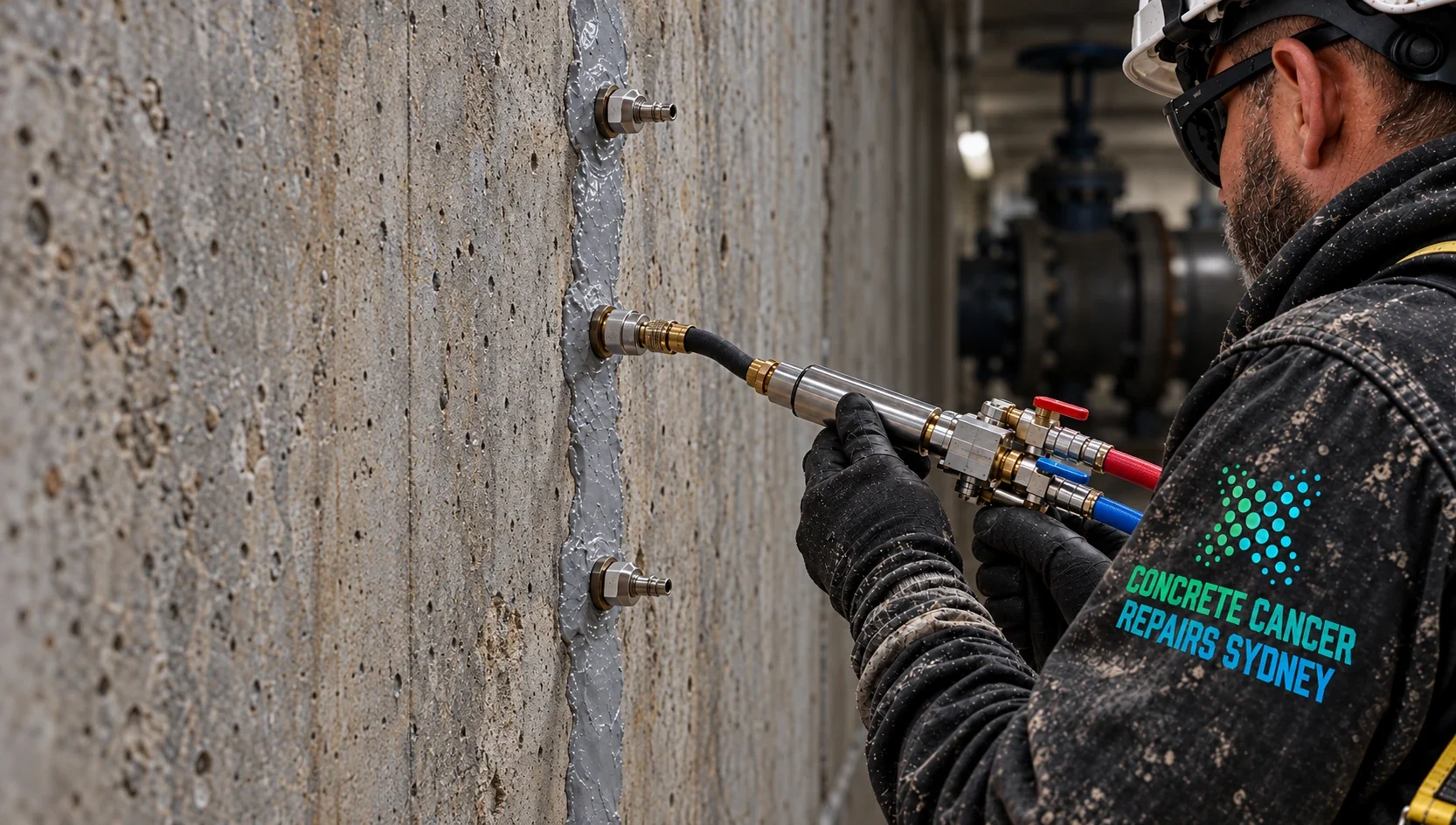
Crack injection can serve different purposes. Structural bonding and leak sealing are not the same objective, and the resin must suit the crack, moisture conditions and movement.
Define The Purpose
Separate load transfer from water sealing.
Assess The Crack
Consider cause, movement and moisture.
Select A System
Use a specified product and repair method.
Choose The ObjectiveBefore The Resin
An injection proposal should explain what the treatment is intended to achieve. Is the aim to bond suitable concrete across a crack, seal a water path or support a broader repair? A product name alone does not answer that question.
Epoxy injection systems are commonly specified for rigid bonding where the crack and substrate conditions are suitable. Polyurethane systems are commonly used for leak sealing, including products that react with water. Performance differs between formulations, so those descriptions are starting points rather than a universal selection rule.
Some epoxy products are designed for wet or underwater conditions. Some water-reactive foams are used as part of a staged treatment rather than the complete permanent solution. The selected product documentation and repair specification must address the actual conditions.
Crack Movement Changes The Question
Bonding a crack does not remove the force that caused it. If movement continues, the investigation may need to address restraint, joints, loading or another mechanism. Corrosion-related cracking may also require concrete and reinforcement repairs.
For water entry, see our basement leak repair guide.
When Injection AloneMay Be Incomplete
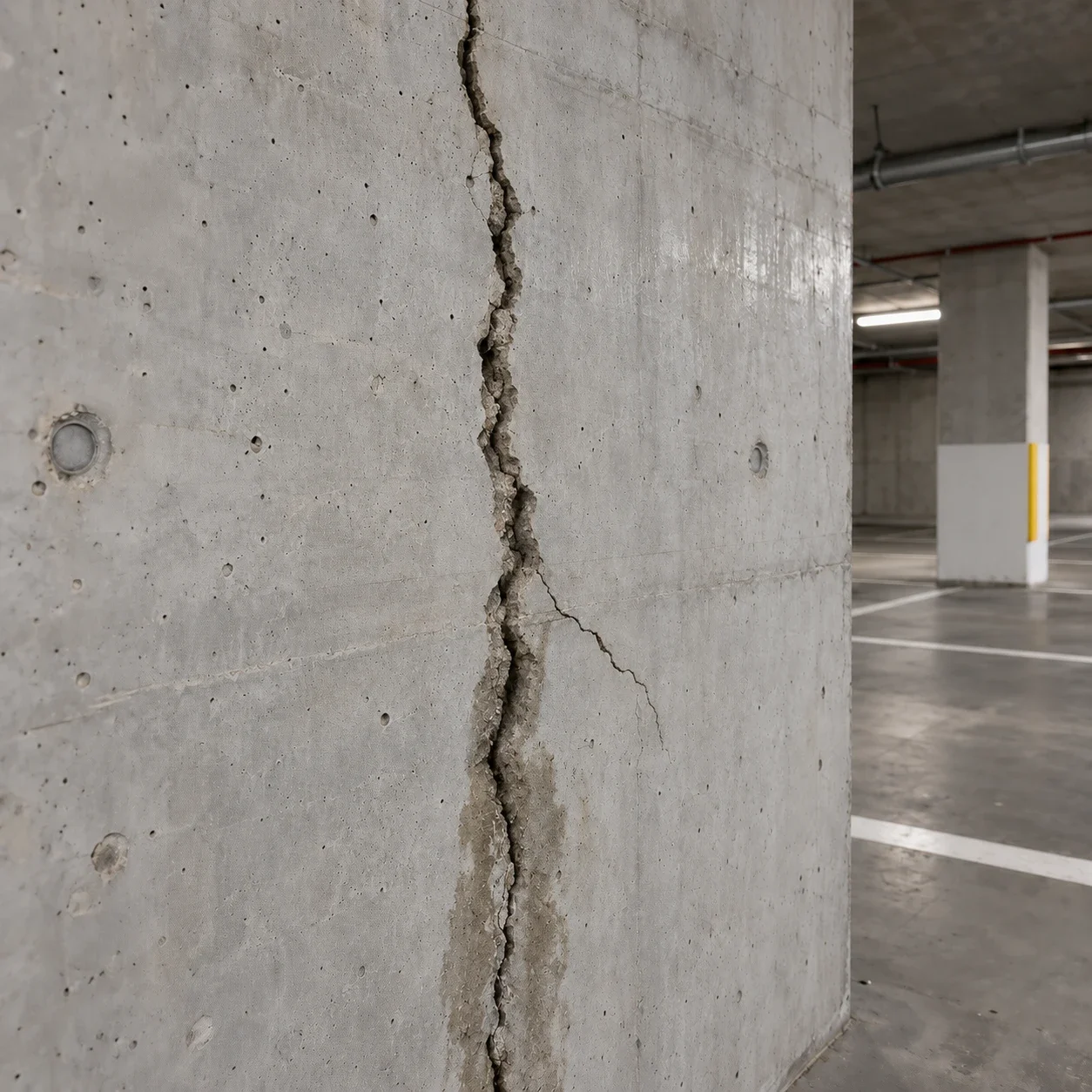
Loose concrete, damaged reinforcement or ongoing structural movement can require work beyond resin placement. The repair scope should identify these issues before an apparently simple crack treatment is priced.
Unsound Concrete Around The Crack
Corrosion Or Exposed Steel
Continuing Movement Or Displacement
Injection pressures, port spacing and resin selection are specialist decisions. Avoid choosing a household resin or drilling ports based only on a photograph or crack width.
Specify A Crack Repair Properly
Investigate
Record crack location, history, movement and water conditions.
Define Performance
State what the completed repair must achieve.
Select & Install
Use a compatible specified system with suitable preparation.
Verify & Record
Complete the agreed checks and retain treatment records.
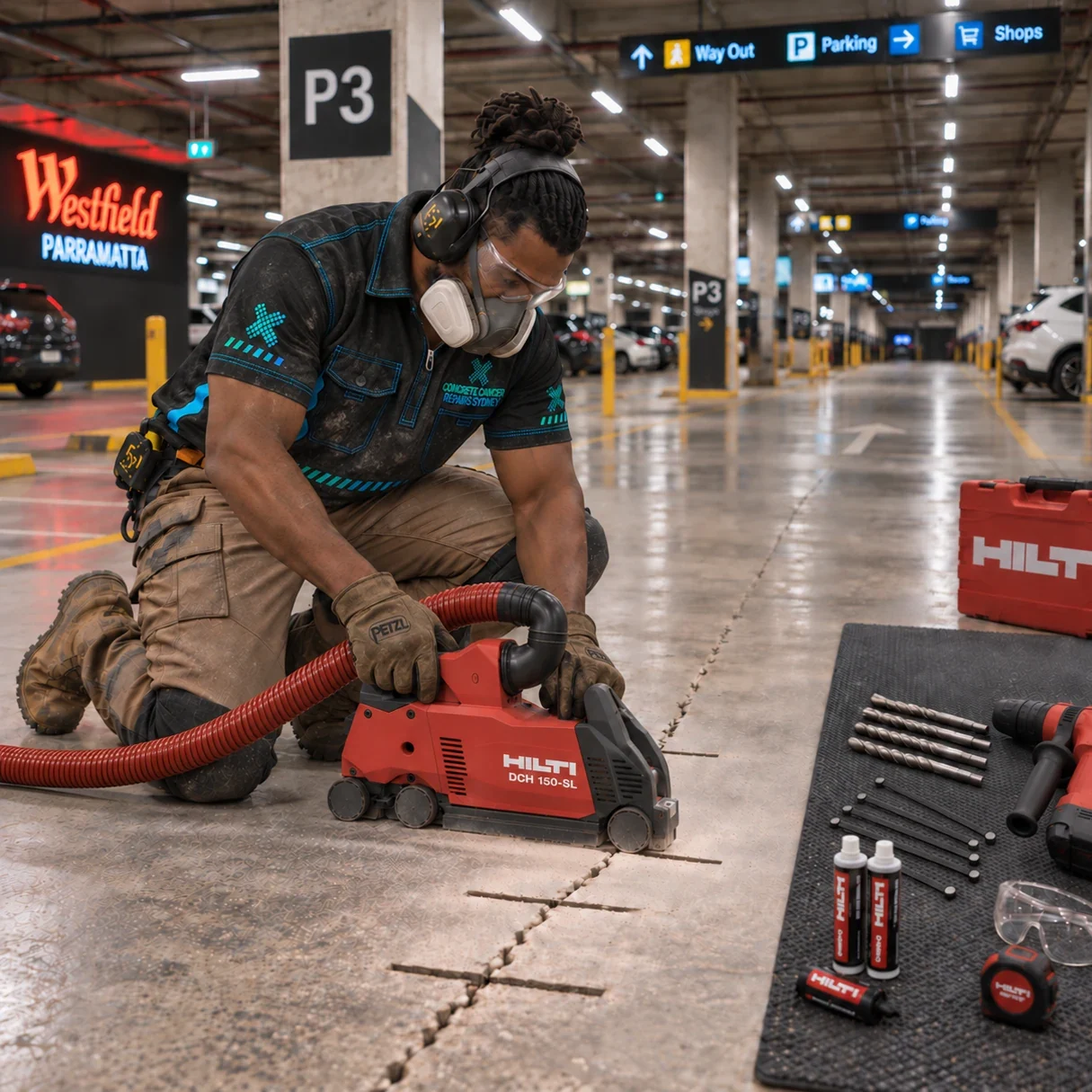
After TheInjection Work
Ask for a record of treated locations, product identification and relevant observations. The appropriate follow-up depends on whether the objective was bonding, sealing or another specified outcome.
Know The Objective
Keep the agreed performance requirements with the repair records.
Watch For Change
Report reopening, new displacement or recurring water entry.
Maintain Related Details
Address joints, drainage or other items included in the scope.
What Influences Injection Costs?
Crack Extent
Length, depth and connectivity affect treatment requirements.
Water Conditions
Active leakage can require additional preparation or stages.
Access
Height, confined areas and marine conditions affect delivery.
Verification
Specified checks and associated repairs influence the total.

Unsure WhatYour Crack Needs?
Send photographs and any inspection report. We can discuss the information needed to assess the crack and develop an appropriate repair proposal.
Crack Photos
Include a wider view and close detail from a safe position.
History
Explain changes, leaks and previous treatments.
Reports
Attach engineering advice or an existing specification.