


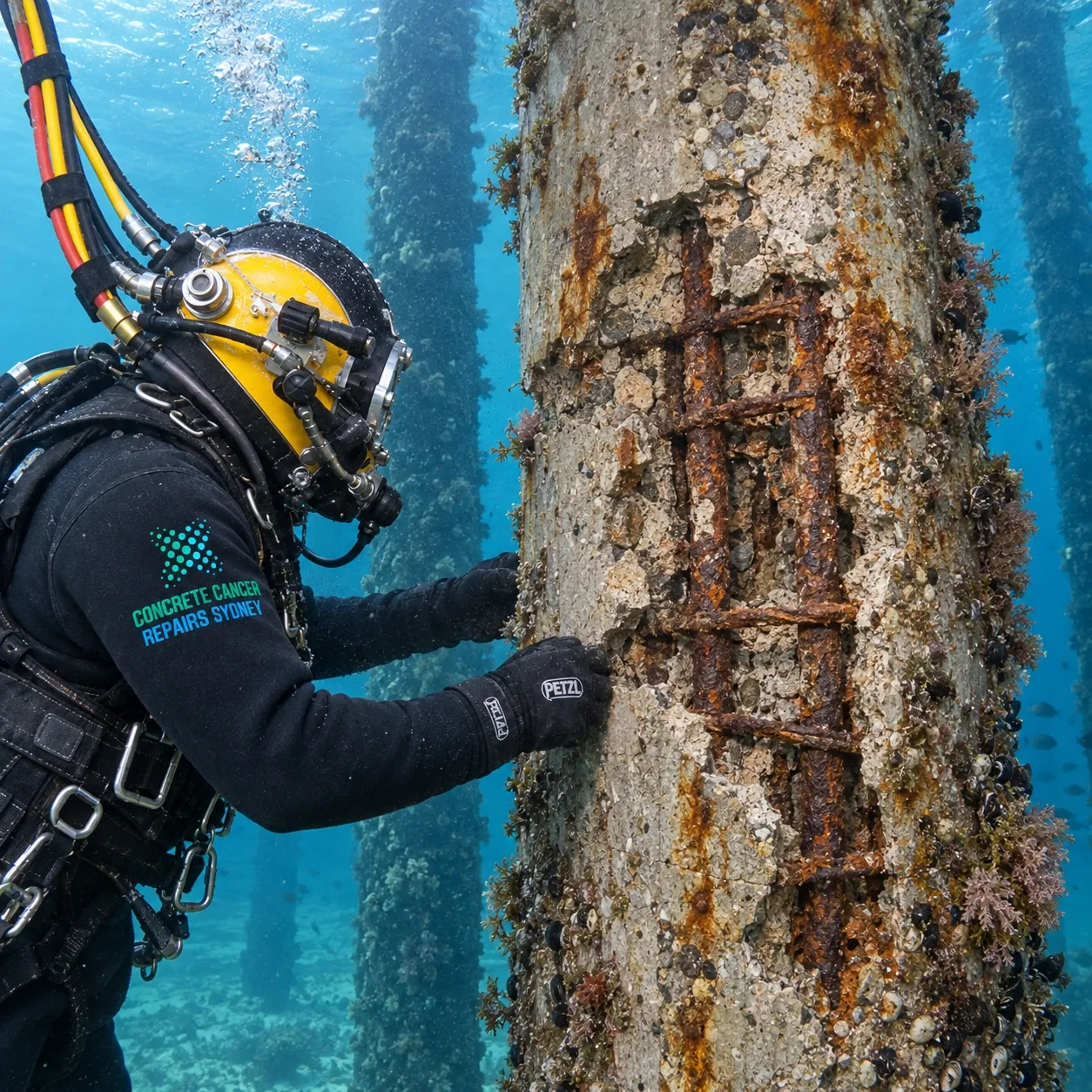
Corroded reinforcement in marine piles
Can rusted rebar be repaired? Understand how remaining steel, concrete condition and marine exposure determine the right repair approach.
Understand the causes
How saltwater exposure contributes to reinforcement corrosion.
Explore repair options
What inspection findings mean for repair and strengthening.
Protect your asset
Plan corrosion protection and ongoing condition checks.
Why reinforcement corrodes in marine environments
Concrete’s alkaline environment normally protects embedded steel. Chlorides from seawater can penetrate the concrete and disrupt that protection, allowing corrosion to develop when conditions support it.
Tidal and splash zones can be particularly aggressive because repeated wetting and drying supplies both salt and oxygen. Submerged areas also need assessment: exposure varies around the pile and through its depth.
Can rusted rebar be repaired?
Rusted reinforcement in marine concrete piles may be repairable, but the decision depends on remaining steel, concrete condition and structural demands. Cleaning corrosion or covering the damage does not replace lost reinforcement or establish safe load capacity.
Inspection findings guide whether local reinstatement, additional steel, an engineered jacket or another repair approach is appropriate. The specification must address marine exposure, material compatibility, access and future maintenance. Significant steel loss needs a project-specific engineering assessment.
Inspectors should record exposed bars, measurable steel loss and the condition of adjacent concrete. Chloride testing may be needed to establish repair limits beyond visible damage.
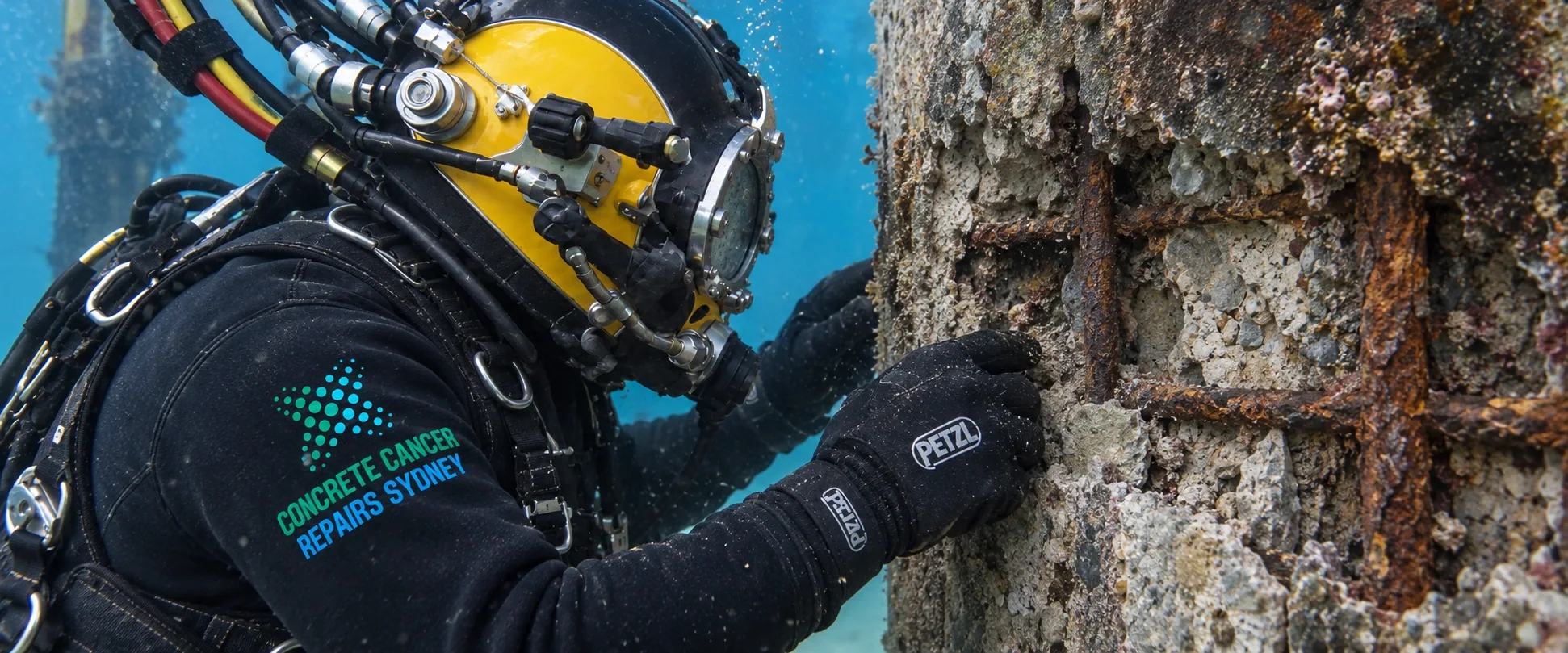
Identifying dangerous reinforcement loss
Rust staining is a warning sign, but it does not tell you how much steel has been lost. Corrosion products can crack and detach the concrete cover, while pitting and section loss reduce the remaining reinforcement.
The location of damage matters as much as its appearance. Loss of main bars, ties, bond or anchorage needs engineering assessment before a repair is selected.
Spalling concrete and exposed reinforcing bars
Cracked or missing cover exposes reinforcing bars to further seawater exposure and deterioration.
Rust staining and cracks along reinforcement
Rust marks and lengthwise cracks can indicate corrosion expanding beneath the concrete surface.
Pitting or visibly reduced bar diameter
Localised pitting can remove significant steel even where much of the bar still looks intact.
Loose cover, delamination and damaged ties
Detached concrete and damaged ties may affect bar restraint, bonding and load transfer.
Underwater inspections by commercial divers
An underwater inspection records the condition of the pile and the extent of visible damage. Local cleaning, visual and tactile checks, measurements and photographs help establish what is happening beneath marine growth.
The findings support the engineer’s assessment. Where needed, the investigation can include material testing and further exposure of reinforcement; photographs alone cannot establish remaining load capacity.
Locate damage
Locate and map cracks, spalls and exposed steel
Measure steel
Record bar measurements where safely accessible
Record condition
Document damage with photographs or video
Inform the repair
Provide findings for repair design and prioritisation
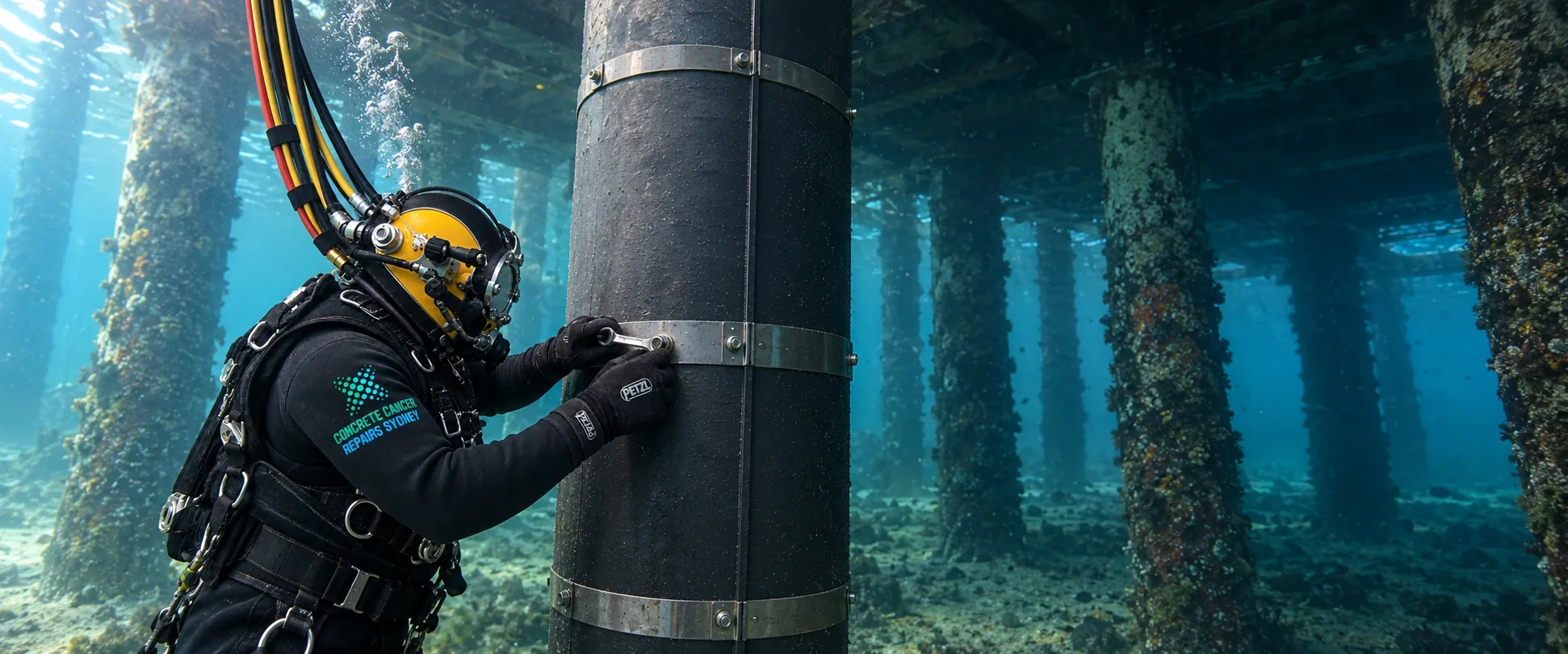
Marine protection options
Repairing the damaged area is only part of the decision. Chlorides can remain in surrounding concrete, so the repair design should consider the risk of further corrosion and how the asset will be maintained.
A jacket can form part of a repair or protection system, but the shell alone does not establish structural capacity or guarantee that corrosion has stopped.
Engineered pile jackets and encapsulation systems
A specified jacket system may protect the pile or form part of an engineered rehabilitation.
Cathodic protection where assessed as suitable
An engineered corrosion-control method where site conditions and testing support its use.
Coatings suited to the exposure and substrate
Compatible protective coatings selected for the substrate and marine exposure zone.
Planned inspections and maintenance records
Document condition changes and schedule future checks of the completed work.
Our 4 stage repair process
Inspect & assess
Document the damage, assess remaining reinforcement and confirm the repair requirements.
Remove & prepare
Prepare concrete and steel within the engineer’s specified limits and work sequence.
Reinstate
Install any designed reinforcement and rebuild the section using the selected repair system.
Protect & monitor
Complete quality checks, apply specified protection and establish an inspection plan.
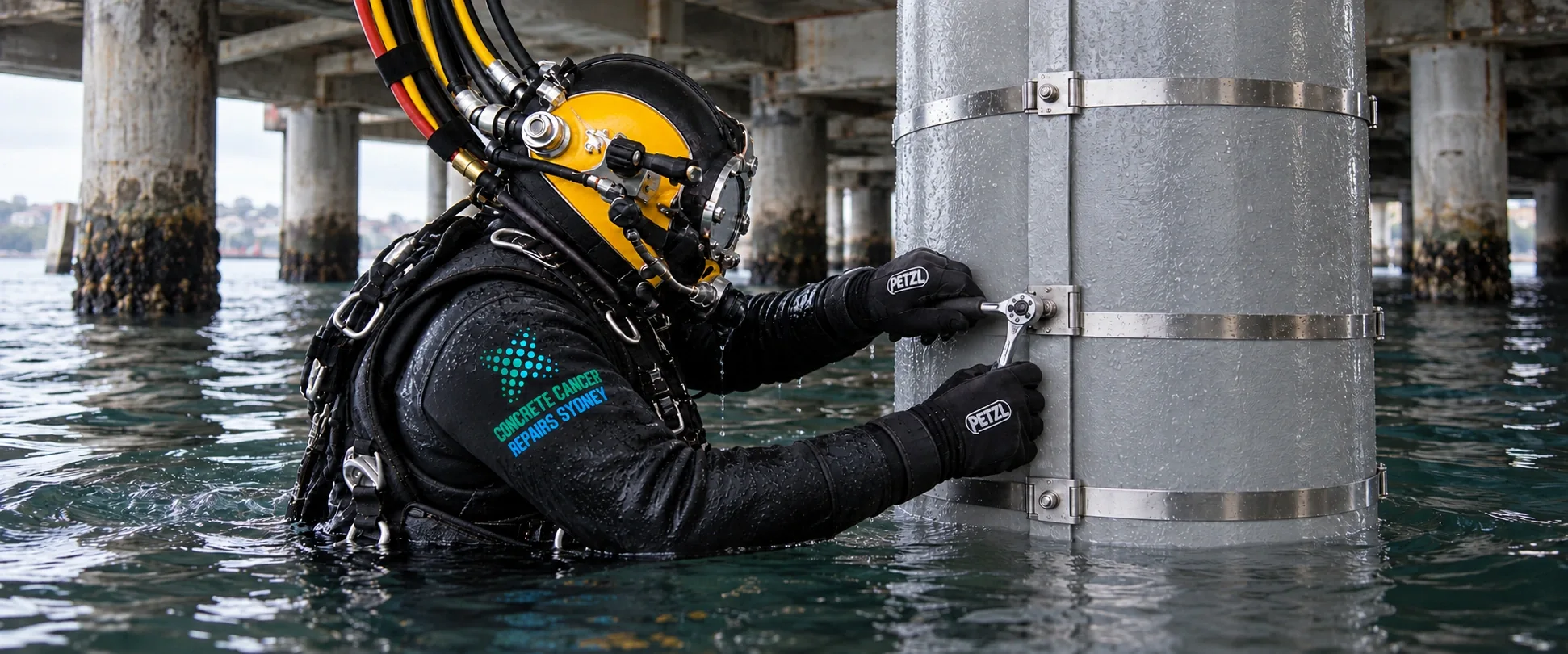
Let’s assess your marine structure
Concerned about corroded reinforcement or deteriorating marine piles? Share your site location, photographs and any inspection or engineering reports. Our team can discuss the information available and the next steps for assessment.
Photos & reports
Share photographs, inspection records or an engineer’s scope.
Location & access
Tell us where the structure is and how the affected piles can be accessed.
Repair scope & timing
Outline the affected areas and your preferred timeframe.
Frequently asked questions
Can rusted rebar always be repaired underwater?
No. Repair suitability depends on the extent of steel loss, the condition of the concrete, the pile’s structural role and access. Some piles can be repaired underwater; others need a dry work area, strengthening or replacement. The repair designer determines the appropriate approach.
How do you determine if reinforcement has lost too much section?
Accessible bars are cleaned and measured as part of the investigation, and the results are compared with the expected original reinforcement and the structure’s requirements. Pitting, tie condition, bond and anchorage also matter. There is no single percentage that decides every pile repair.
What repair materials are used for underwater reinforcement repairs?
Depending on the design, options include cementitious repair mortars, anti-washout concrete or grout, and selected epoxy-based systems. Products must be specifically suitable for the substrate, water exposure and placement method. Ordinary above-water patching products are not automatically suitable underwater.
How long do underwater rebar repairs last?
There is no universal service life. Performance depends on the original damage, repair design, preparation, materials, installation quality and ongoing exposure. Ask for the project’s intended service-life objective and maintenance requirements rather than relying on a generic lifespan claim.
Do you provide inspection information for engineers?
Contact CCRS with the site location, existing reports and the information your engineer needs. We can discuss an inspection scope covering photographs, damage locations and accessible measurements. The engineer uses the agreed findings to assess capacity and specify the repair.