


Concrete FallingFrom An Underside?
Loose concrete above people or property needs prompt attention. Keep clear of the affected area, notify the responsible building contact and arrange a professional assessment.
Keep People Clear
Avoid standing or working beneath loose material.
Report The Location
Tell building management exactly where it is happening.
Arrange Assessment
Establish the hazard, cause and repair scope.
First AddressThe Falling-Material Hazard
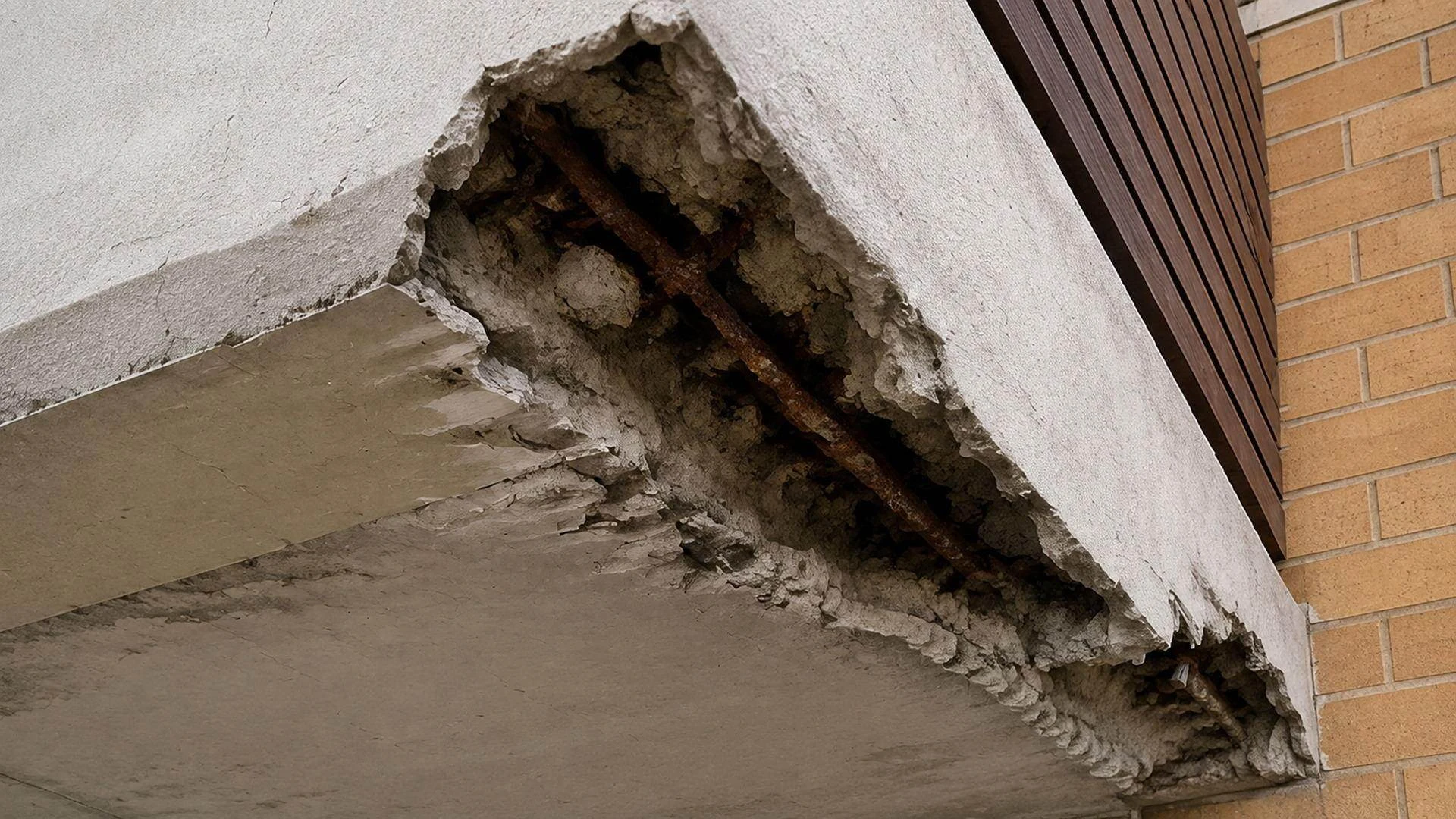
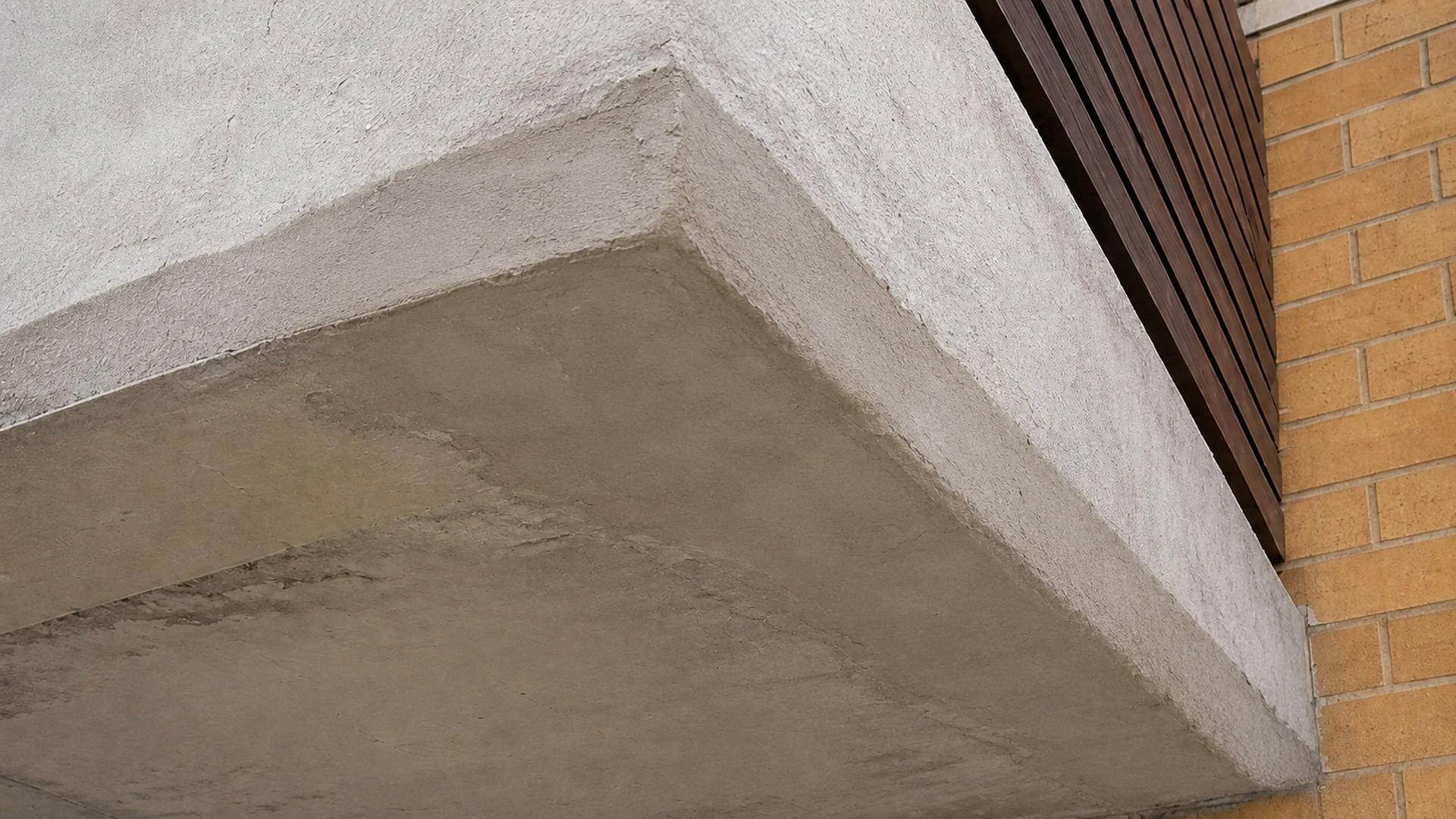
Concrete breaking away from a ceiling, slab edge or balcony underside is often described as spalling. Corroding reinforcement can cause it, but the cause must be investigated. Even a small fragment falling from height can injure someone.
Do not stand beneath the damage to inspect it, tap it with a tool or attempt to remove loose pieces yourself. Keep others away where you can do so safely, and notify the owner, strata manager or building manager promptly.
If there is immediate danger to people, active collapse or someone is injured, call 000. Otherwise, arrange prompt assessment by an appropriately qualified building or structural professional and a concrete repair contractor. The urgency and access restrictions depend on the condition observed.
Make Safe Does Not Mean Fully Repaired
Temporary protective measures and a permanent repair are different scopes. An initial response may involve access restrictions or other measures selected by the responsible professionals. It does not establish that the underlying deterioration has been resolved.
Our guide to living at home during repairs covers occupation planning. Ask what is safe to use, who is making that determination and what must happen before restrictions are lifted. Do not assume a balcony is safe above simply because loose fragments have been removed below.
Look ForAssociated Damage
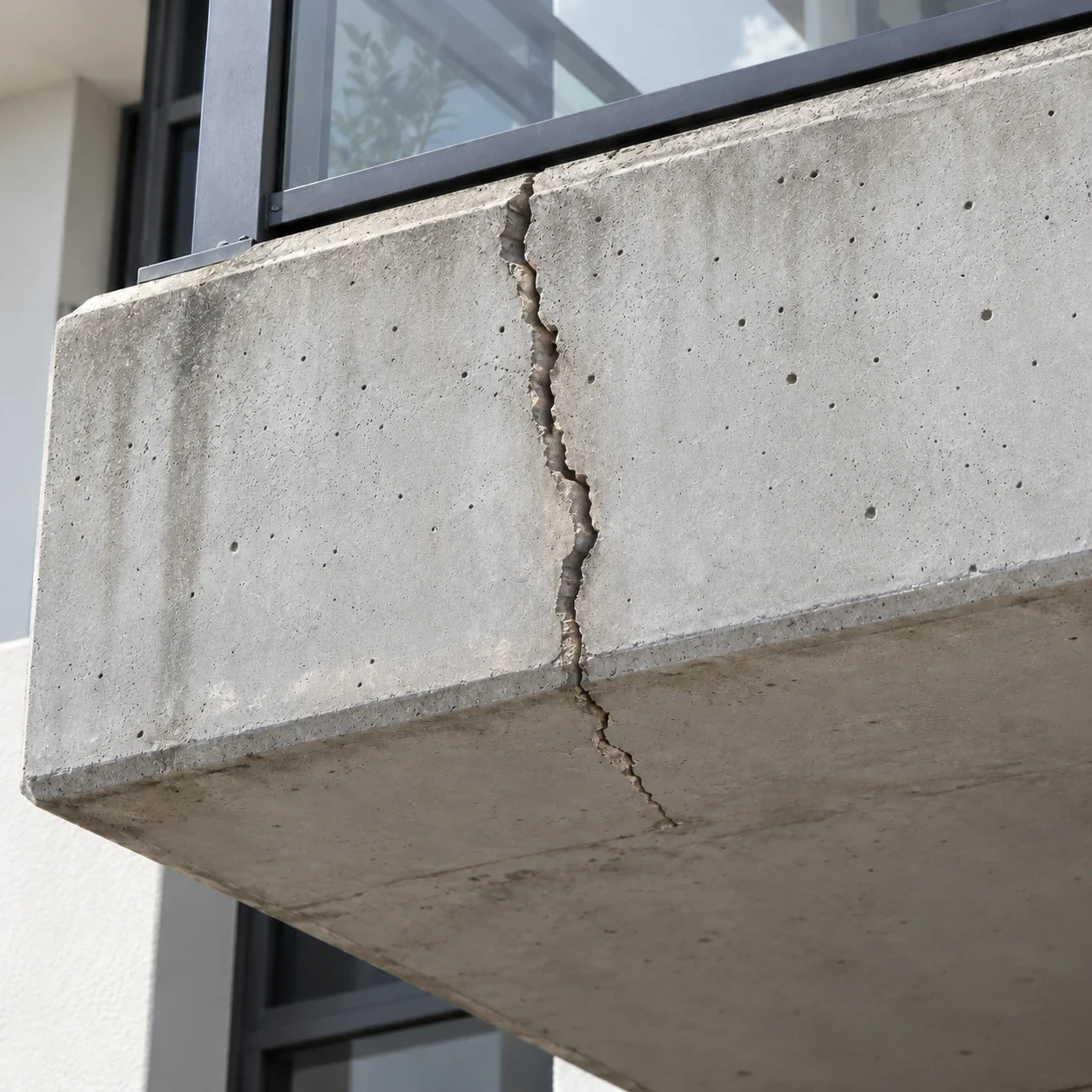
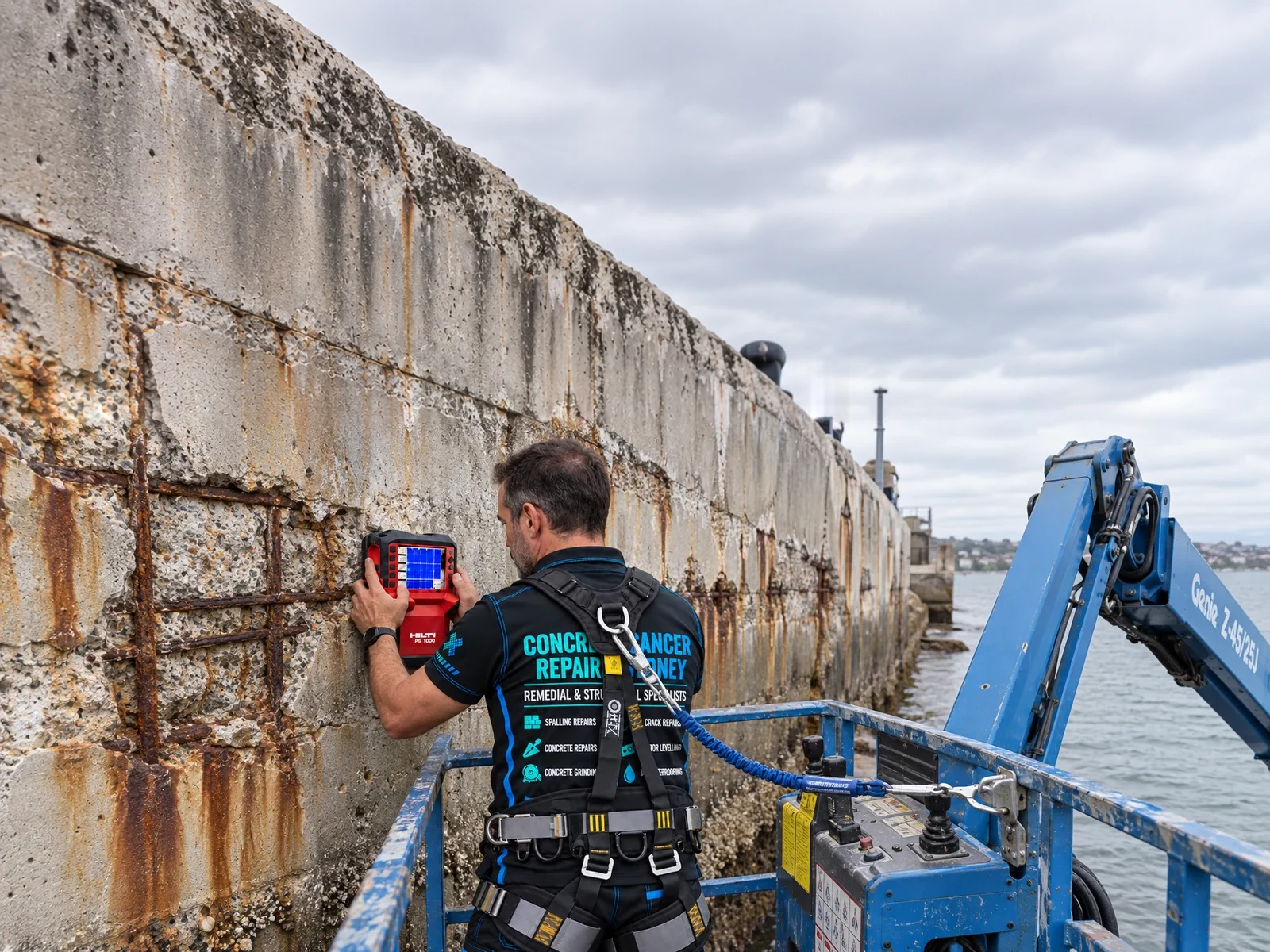
The inspection may need to extend beyond the first visible patch and include the top of the slab. Leaks, corrosion or concealed separation can affect adjoining areas that still appear intact from below.
Exposed Reinforcing Steel
Bulging Or Cracked Surfaces
Leaks And Rust-Coloured Stains
A remote photograph helps identify the location and organise attendance. It cannot establish the extent of concealed deterioration or confirm structural capacity. Follow the site-specific restrictions provided after assessment.
What Usually Happens Next
Notify & Restrict
Report the hazard and keep clear under the responsible site arrangements.
Inspect & Assess
Investigate the concrete, reinforcement and possible source of deterioration.
Specify & Repair
Agree access, temporary works, repair materials and quality checks.
Inspect & Release
Confirm completion requirements and authorisation before reopening affected areas.
After TheArea Reopens
Keep the repair records and any instructions on monitoring or maintenance. If water entry contributed to the damage, make sure the associated work is included in the overall building plan.
Retain Documentation
Keep assessment findings, repair details and completion records.
Maintain Related Areas
Follow instructions for membranes, drainage, coatings and joints.
Report Recurrence
Escalate fresh cracking, rust marks or loose concrete promptly.
What Affects Overhead Repair Costs?
Safe Access
Scaffolding, platforms and protection affect how the work is delivered.
Repair Extent
Concealed damage may be larger than the visible missing patch.
Structural Needs
Engineering, reinforcement work or temporary support can change the scope.
Building Use
Resident access, vehicle movements and staging influence the programme.
Need AnUnderside Inspection?
Once the immediate hazard has been addressed, share the location and available reports so we can discuss the next steps for a concrete repair assessment.
Safe Photographs
Send existing images without entering a restricted area.
Site Contact
Include the building manager or authorised project contact.
Existing Advice
Share any access restrictions or engineering recommendations.