




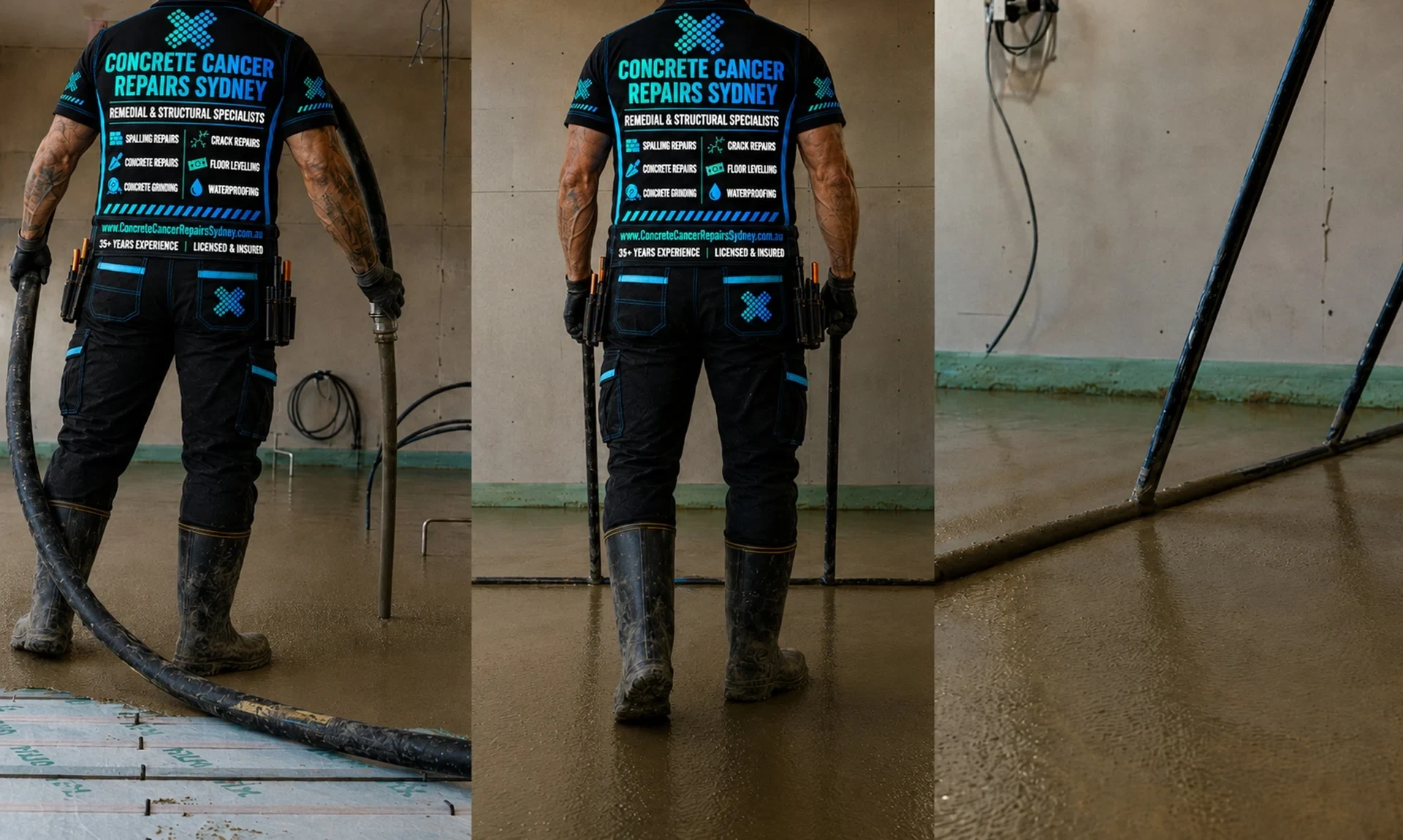
Before New Flooring,Check The Concrete
Cracks, uneven areas and damaged concrete need different responses. Establish the substrate condition before selecting repairs, levelling products or a new floor covering.
Separate The Problems
Distinguish unevenness from damaged concrete.
Check Product Requirements
Match preparation to the intended floor system.
Sequence The Work
Repair and verify the slab before covering it.
A Flat FloorStarts With A Suitable Substrate
Removing carpet or tiles can reveal cracks, old adhesive, uneven patches or loose concrete. These observations do not all call for the same treatment. A floor can be flat but weak, or sound but unsuitable for the proposed finish without further preparation.
The assessment should distinguish surface defects from deeper deterioration and investigate cracks that may be moving or structurally significant. Levelling material changes the surface profile; it does not automatically restore damaged reinforcement or resolve movement.
Explain the planned finish at the start. Timber, vinyl, tiles and other systems can have different substrate, moisture and installation requirements. Include the flooring installer in the handover discussion so the repair work supports the final system.
Flat, Level And Sound Mean Different Things
Flatness describes local surface variation, while level describes the overall relationship to a horizontal plane. A sound substrate is also strong and stable enough for the specified system. Ask which requirement is being measured and what tolerance the flooring supplier requires.
Floor levelling may form part of the preparation after defects have been addressed. Existing joints, moisture conditions and material compatibility still need to be considered rather than hidden beneath a new layer.
When Basic PreparationMay Not Be Enough
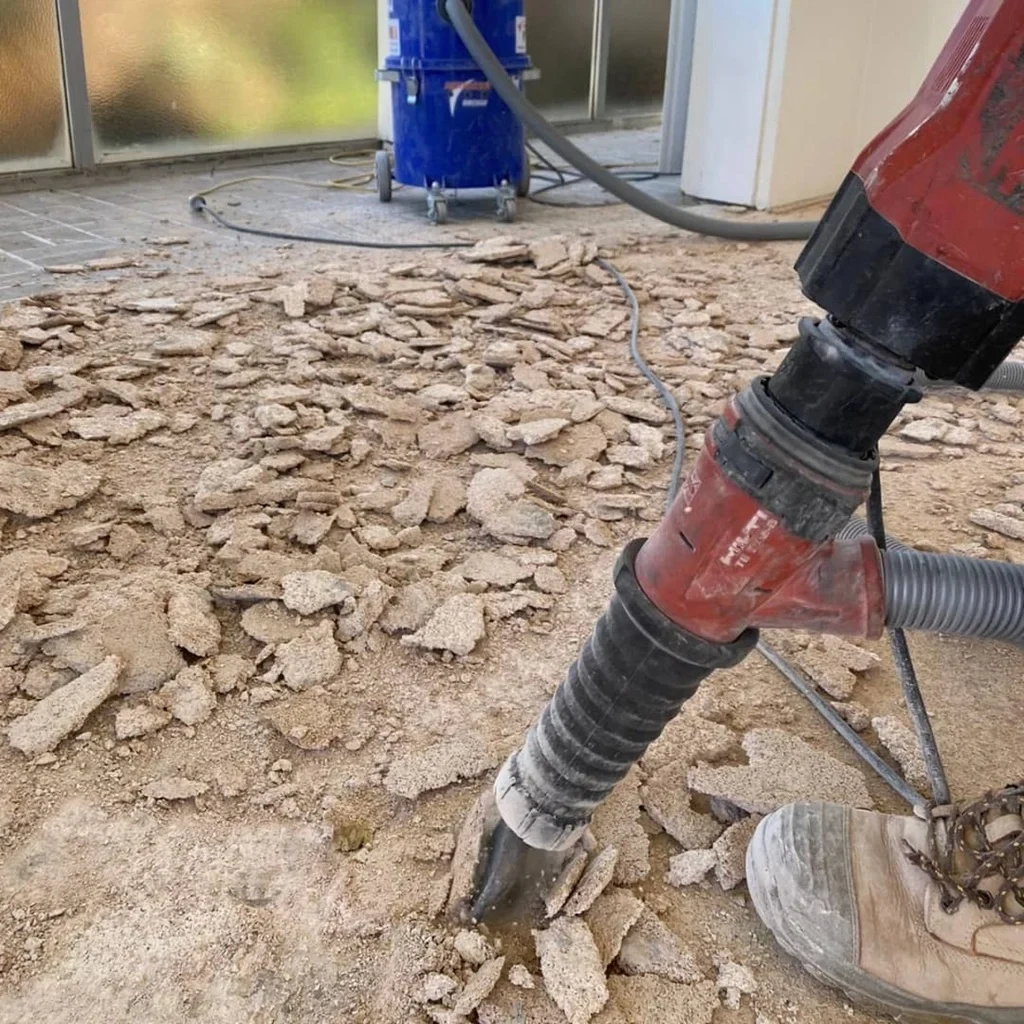
Loose or hollow areas, rust staining and damaged reinforcement justify a concrete assessment before routine smoothing work. A newly exposed older topping may also need identification and a separate removal strategy.
See our magnesite flooring guide if that material is suspected.
Loose Or Breaking Concrete
Cracks With Movement Or Staining
Unknown Toppings Or Persistent Damp
Have older flooring layers and adhesives assessed before grinding or removal where hazardous materials may be present. Concrete processing also requires appropriate dust controls. Do not start destructive preparation simply to see what is underneath.
A Better Flooring Sequence
Assess The Slab
Inspect exposed areas and identify defects, old materials and moisture concerns.
Confirm The System
Agree the intended finish and substrate acceptance requirements.
Repair & Prepare
Complete the specified repairs, preparation and any levelling work.
Verify & Install
Confirm readiness with the flooring installer before the surface is covered.
Plan TheTrade Handover
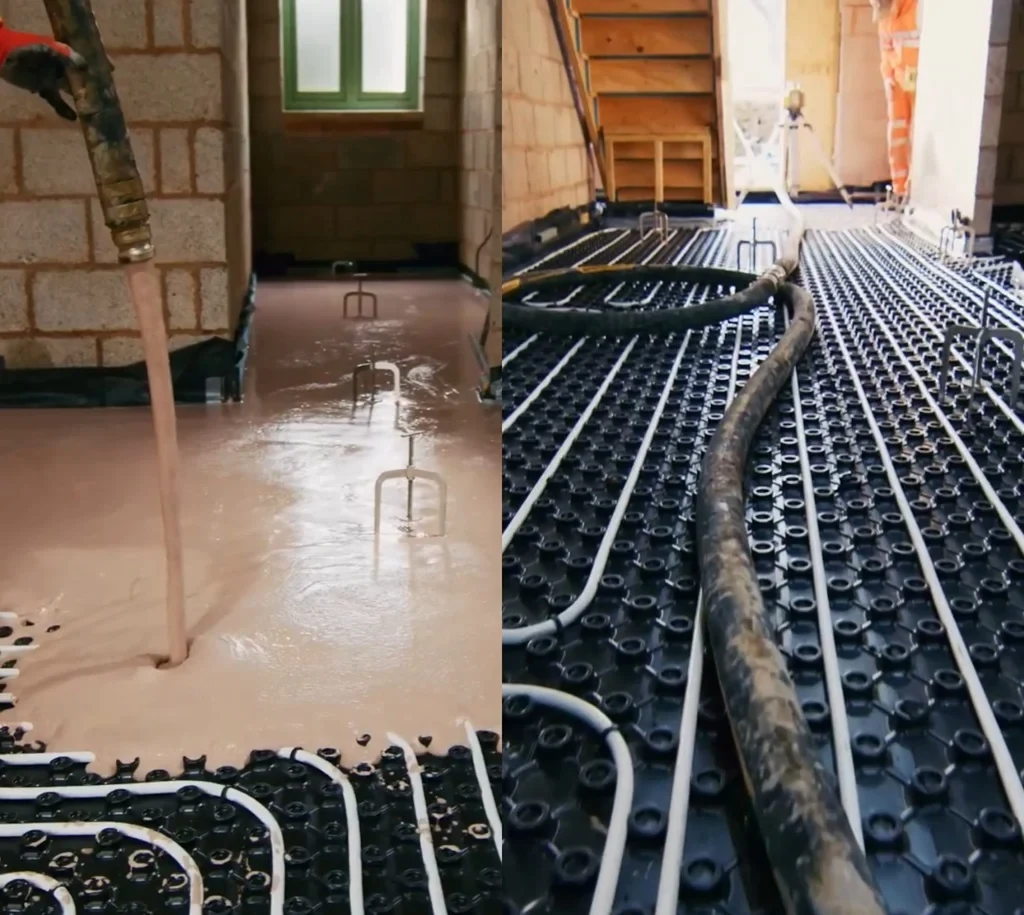
Agree who checks the substrate and records acceptance before installation begins. This prevents a repair contractor, levelling contractor and flooring installer each assuming that another party has completed the final checks.
Share Material Details
Provide the repair and preparation products used on the slab.
Record Test Results
Keep relevant moisture and surface checks with the project documents.
Protect The Surface
Avoid contamination or premature loading while materials cure.
Allow For The Complete Floor Scope
Removal
Existing coverings, adhesives and toppings may need separate treatment.
Concrete Repairs
Damage extent and reinforcement condition affect remediation.
Preparation
Surface treatment, primers and levelling depend on the chosen system.
Final Build-Up
Thresholds, doors and applicable acoustic requirements affect the finish.

Found ProblemsUnder Your Flooring?
Send photos of the exposed surface and the proposed floor finish. We can discuss whether concrete repairs or further investigation are needed before preparation continues.
Visible Defects
Show cracks, raised areas, loose material and old toppings.
Floor Specification
Include the intended covering and any installer requirements.
Site Details
Tell us the room use, access and renovation timetable.