

FREE QUOTE CALL OR TEXT
0424 408 330
Trusted by Builders, Strata Managers & Property Owners*
No Call Out Fee Conditions apply*
GET YOUR JOB BOOKED IN AND FINISHED TODAY !!
"*" indicates required fields
How Concrete Cancer Is Professionally Repaired (Detailed Step-By-Step Process)
Contrary to popular belief, Concrete Cancer cannot be fixed simply by patching cracks or applying a surface coat. Because the problem originates inside the concrete, long-term repairs must remove damaged concrete and treat or replace corroded steel reinforcement. Professional remediation ensures the problem does not return.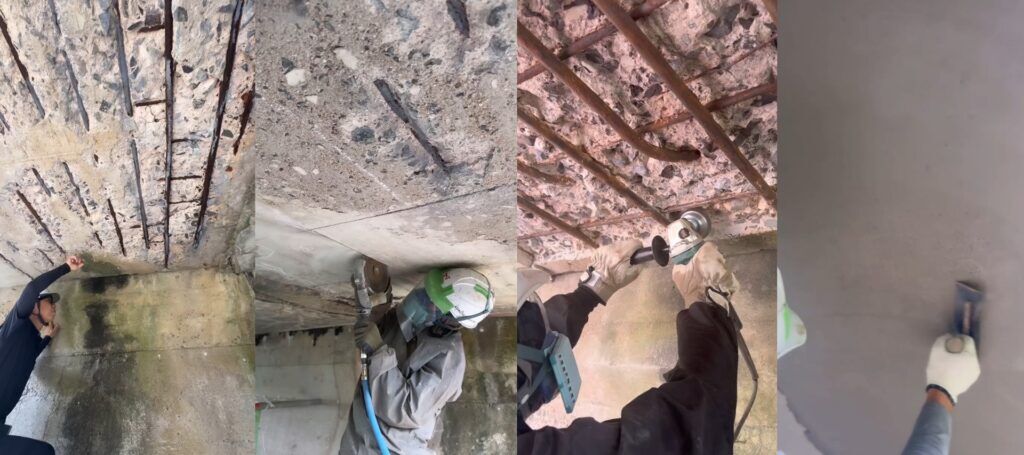
The Correct Repair Process
Professional concrete cancer remediation is a multi-stage procedure designed to remove weakened concrete, stop ongoing corrosion, restore structural strength, and prevent the issue from returning in the future. Each step is critical—skipping or rushing any part of the process almost always results in re-occurrence and further structural deterioration down the track.
Below is the industry-standard process followed by professional concrete cancer specialists:
STEP 1: Removing Loose, Detached or Delaminated Concrete
The damaged or unstable concrete is mechanically removed to expose the full extent of deterioration. This includes removing spalling sections, hollow areas, weak patches, and all loose material surrounding the corroded steel reinforcement. The goal is to expose a clean, structurally sound substrate for repair.
STEP 2: Grinding & Preparing The Affected Concrete Surface
Once the loose material has been removed, grinding equipment is used to clean and profile the concrete surface. This ensures bonding strength for repair materials and eliminates remaining contamination such as rust staining, failed coatings, or delaminated concrete fragments.
STEP 3: Exposing Reinforcing Steel & Structural Components
The reinforcing steel (rebar) must be fully exposed so that all sides of the affected steel can be treated. Partial exposure is never enough. This step reveals the true extent of corrosion and allows technicians to assess whether the steel requires cleaning, treatment, or complete replacement.
STEP 4: Treating, Cleaning or Replacing Corroded Reinforcement
All rust, corrosion scale, and contamination must be removed. Depending on the condition of the steel, this may involve abrasive blasting, mechanical wire brushing, chemical cleaning or, in severe cases, complete reinforcement replacement. This step is crucial to ensuring corrosion does not continue beneath the repair.
STEP 5: Applying Specialist Corrosion-Inhibiting Products
Professional-grade corrosion protection products are applied directly to the steel. These specialist treatments prevent further oxidation, re-passivate the steel, and create a corrosion-resistant barrier to extend the lifespan of the repaired structure.
STEP 6: Rebuilding & Reconstituting Concrete Sections
Structural repair materials are used to rebuild all removed areas. Depending on engineering requirements, this may include polymer-modified repair mortars, high-strength concrete repair compounds, structural patching, or epoxy-modified systems. This step restores structural integrity and prevents future moisture penetration.
STEP 7: Installing Long-Term Protective Coatings & Waterproofing
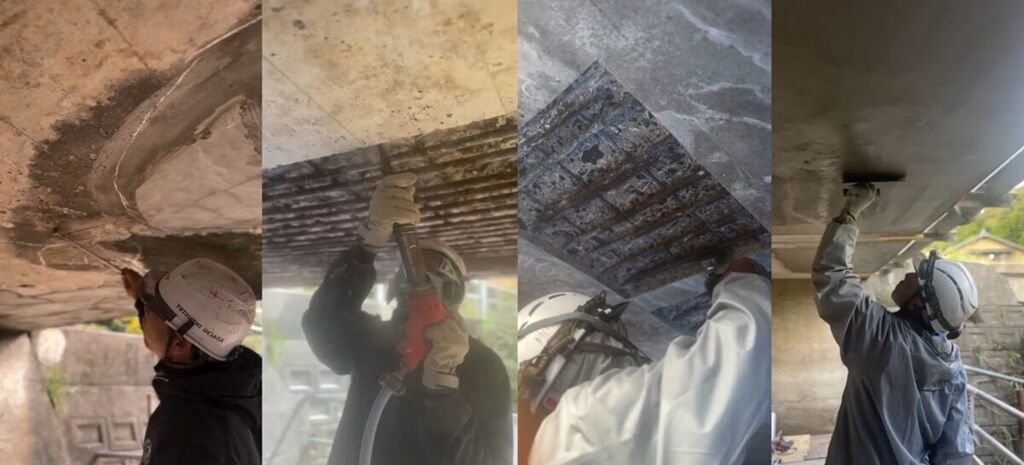
Finally, a long-term protective system is installed—usually involving a waterproofing membrane, protective coatings, sealants, or crack-resistant barriers. This final layer stops moisture ingress, protects against corrosion, and prevents the cycle of concrete cancer from re-starting.
This comprehensive remediation sequence not only eliminates existing concrete cancer, but restores structural strength, prevents future deterioration, and ensures long-term protection of the concrete structure—especially in coastal environments like Sydney.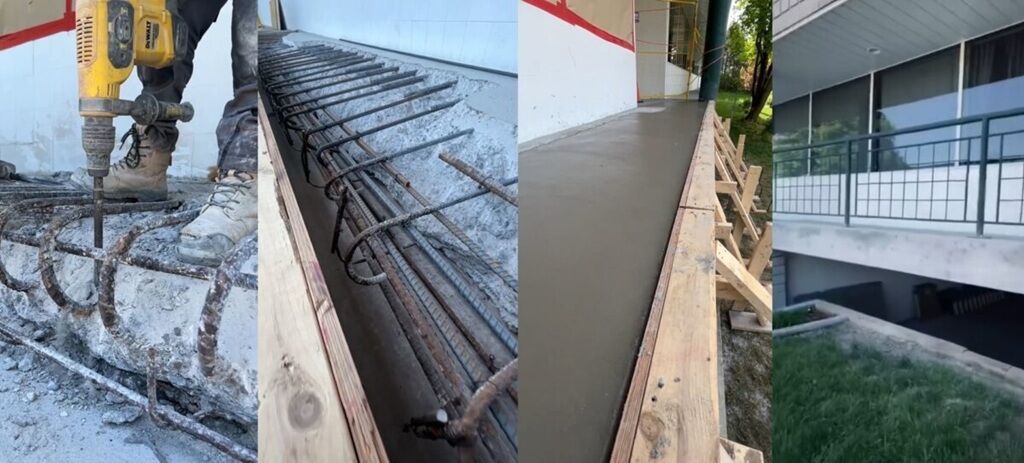
When Engineering Is Required
More severe structural cases may require a registered structural engineer to:
– Assess load capacity
– Specify reinforcement replacement
– Determine structural strengthening requirements
– Inspect each stage of remediation work
Serious cases often involve full structural remediation rather than simple surface repairs.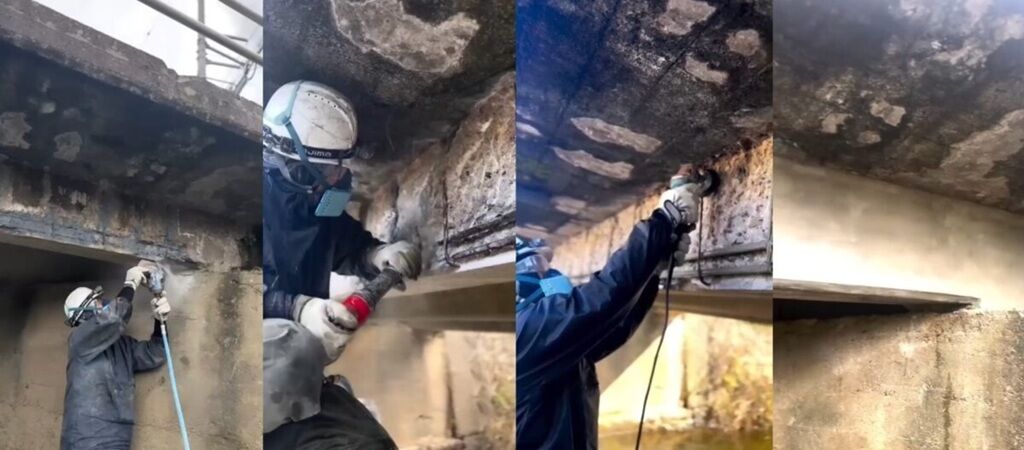
The Importance Of Waterproofing Protection
Once the concrete is rebuilt, protective waterproof membranes are normally installed. Waterproofing prevents future moisture penetration, which is especially important for:
– Balconies
– Rooftops
– Suspended slabs
– Sea-facing walls
Proper waterproofing dramatically reduces the risk of future corrosion and protects the investment long-term.

FREE QUOTE CALL OR TEXT
0424 408 330
Trusted by Builders, Strata Managers & Property Owners*
No Call Out Fee Conditions apply*
GET YOUR JOB BOOKED IN AND FINISHED TODAY !!
"*" indicates required fields
"*" indicates required fields
"*" indicates required fields
OFFICE LINE
WORKING HOURS